Our Scans
·
Future of work
·
Intelligence Briefing
Intelligence Briefing about Future of Work
Critical Trends Impacting Ministry of Health NSW
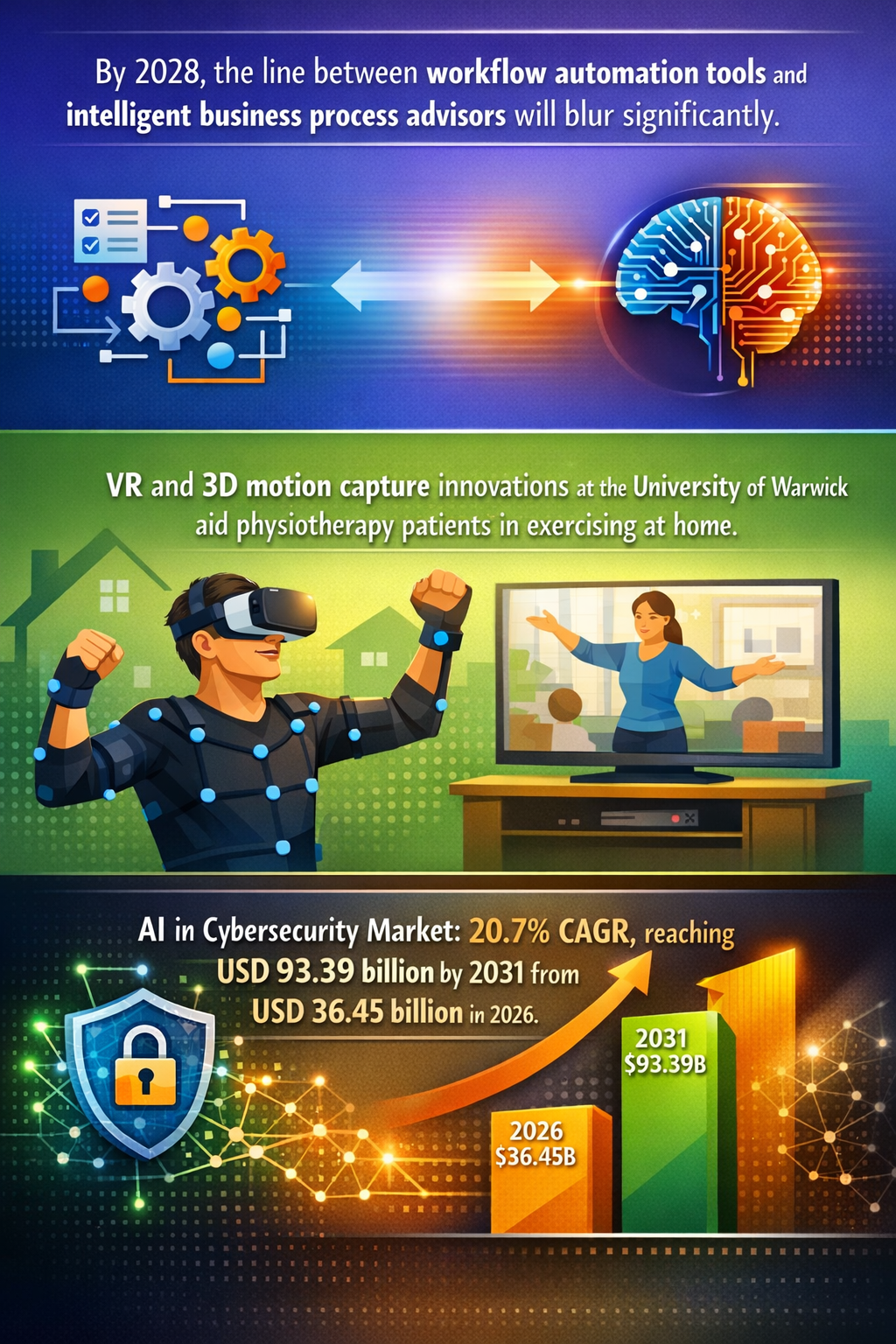
- Integration of Virtual and Augmented Reality in Healthcare: VR combined with motion capture is emerging as a tool to enhance patient physiotherapy outside clinical settings, enabling remote care and patient engagement (University of Warwick Research).
- Blurred Lines Between Workflow Automation and Intelligent Advisory Systems: By 2028, AI-driven automation tools will evolve to provide not only task execution but also strategic business process advisory functions, facilitating smarter decision-making (Visioneer IT).
- Acceleration of AI Investment in Healthcare Predictive Analytics: Significant government-backed AI strategies targeting healthcare emphasize predictive health analytics, driving differentiation in health screening services (UAE AI Strategy 2031).
- Massive Global Capital Expenditure on AI Technologies: $1 trillion expected in AI-related capital spending by 2026 signals transformative disruptions and demands integration of cutting-edge AI solutions (Verak World).
- Push for Industrial Digitization and Automation: Initiatives aiming for 50% industrial digitization by 2031 highlight growing momentum toward automation procurement that may influence healthcare logistics and infrastructure (UAE Advanced Industry 4.0).
Key Challenges, Opportunities, and Risks
- Challenges: Ensuring equitable access to advanced digital health technologies, integrating AI-driven tools within existing healthcare frameworks, maintaining workforce skills amid automation.
- Opportunities: Leveraging virtual therapies to reduce hospital visits, adopting AI advisory systems to optimize operational efficiencies, capitalizing on predictive analytics to improve patient outcomes.
- Risks: Overreliance on automated decision-making risking loss of human oversight, potential data privacy and cybersecurity vulnerabilities, uneven adoption creating disparities in care quality.
Scenario Development
- Best-Case: Seamless integration of AI and VR technologies leads to a highly automated, patient-centered healthcare system delivering superior outcomes and operational efficiency, with robust data security and inclusive access.
- Moderate-Progress: Incremental adoption of automation and predictive analytics improves workflows and patient engagement but challenged by workforce adaptation and regulatory delays.
- Technology-Driven Disruption: Accelerated AI deployment creates efficiency gains but exacerbates workforce displacement and raises ethical and privacy concerns, resulting in public resistance and policy setbacks.
- Worst-Case: Fragmented implementation of technologies causes increased disparities in healthcare access, compromised data integrity, and loss of trusted human relationship in patient care, undermining system effectiveness.
Strategic Questions for Senior Policy Advisors and Strategists
- How can Ministry of Health NSW balance automation with human oversight to maintain care quality and trust?
- What frameworks could facilitate equitable access to emerging digital health tools across diverse populations?
- In what ways might AI-driven predictive analytics reshape healthcare policy and resource allocation strategies?
- How should workforce development and reskilling be aligned with the evolving automation landscape?
- What governance models could mitigate data privacy and cybersecurity risks linked to AI adoption?
Potential Actionable Insights and Considerations
- The Ministry could pilot VR-based rehabilitation programs to test efficacy and patient engagement before wider rollout.
- Investment in hybrid human-AI workflows could preserve clinical judgment while leveraging automation benefits.
- Developing partnerships with AI innovators may accelerate capacity-building and ensure state-of-the-art implementations.
- Proactive workforce planning could anticipate and address skill gaps created by automation in healthcare roles.
- Implementing robust data governance policies could enhance public confidence in AI-driven healthcare services.
Briefing Created: 21/09/2026