Our Scans
·
Health Systems
·
Intelligence Briefing
Intelligence Briefing about Health Systems
Critical Trends Impacting Ministry of Health NSW
- Workforce Strain & Systemic Risk: Healthcare providers face substantial operational pressures and workforce challenges that threaten service delivery growth (Alithya LinkedIn).
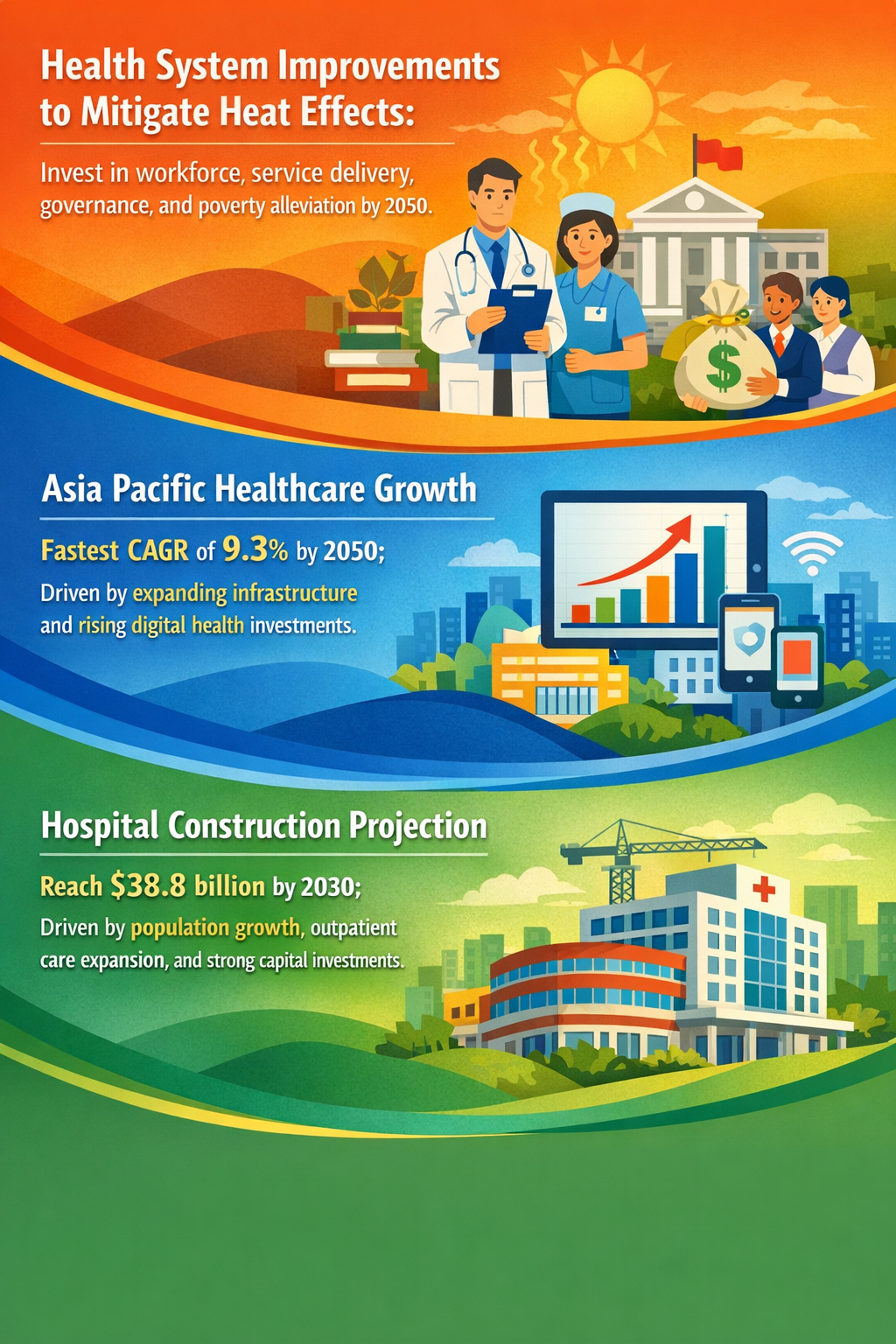
- Expansion of Healthcare Infrastructure: Hospital construction investments are booming, driven by population growth and outpatient care expansion, projected to reach nearly $39 billion by 2030 (HFMA).
- Digital Health Integration: Australia’s digital health platforms like My Health Record are maturing, with significant opportunity to unify data across hospitals, GPs, allied health, insurers, and aged care for better outcomes (IMARC Group).
- Emerging Technologies: Robotics and AI present a growing role, exemplified by Japan’s humanoid caregiver robots and Asia Pacific’s rapid investment growth in digital health technologies (Persistence Market Research, Polaris Market Research).
- Behavioral and Mental Health Prioritization: Policy expansions targeting rural behavioral, maternal, and mental health services offer enhanced support pathways (Congressional Research Service).
- Climate and Public Health Intersections: Investments in health workforce and governance, plus poverty alleviation, are aligned with adaptive strategies to address climate-driven health impacts (PMC Article).
Key Challenges, Opportunities, and Risks
- Challenges: Addressing workforce shortages amid rising demand; managing systemic risks associated with expanding infrastructure and evolving technology; integrating disparate data sources; and scaling mental health services effectively.
- Opportunities: Leveraging digital health platforms for system-wide data integration; adoption of AI and robotics to alleviate workforce pressures; targeted funding for rural and behavioral health; and proactive climate-health resilience strategies.
- Risks: Failures in systemic risk management leading to service disruptions; inequities exacerbated by rapid infrastructure growth; data privacy and integration complexities; and emerging infectious disease threats influenced by global population movements (Live Science).
Scenario Development
- Best-Case: Seamless integration of digital health systems combined with successful workforce augmentation via AI and robotics; rural and mental health funding yields measurable improvements; infrastructure expansion matches population health needs; system resilient to emerging public health threats.
- Moderate Growth: Incremental improvements in digital data linkage and workforce management; some delays in infrastructure projects; rural and behavioral health programs show partial success; manageable public health risks due to proactive but limited interventions.
- Stagnation and Fragmentation: Workforce shortages deepen with insufficient technological adoption; fragmented data systems hinder care coordination; funding limitations stall rural and mental health advances; infrastructure underutilized or misaligned with demand.
- Worst-Case: Systemic risk management failures lead to critical service disruptions; workforce collapse without adequate robotic/AI support; digital health fragmentation causes data breaches and inefficiencies; behavioral and rural health neglected; emerging diseases exacerbate health crises.
Strategic Questions
- How can NSW’s health system accelerate digital integration to create interoperable, actionable data across all care settings?
- What strategies could most effectively mitigate workforce shortages while safeguarding quality of care?
- In what ways can emerging technologies be adopted responsibly to enhance service delivery without exacerbating inequalities?
- How might NSW proactively prepare for and minimize risks from emerging infectious diseases and climate-driven health impacts?
- What approaches could strengthen behavioral and mental health support, particularly in rural and underserved communities?
Actionable Insights for Strategic Decision-Making
- Investment in interoperable digital platforms could enhance care coordination and system responsiveness.
- Exploring pilot programs integrating robotics and AI in frontline service delivery could alleviate workforce pressure.
- Prioritizing funding for behavioral and rural health services could address persistent gaps in access and outcomes.
- Developing integrated climate and public health strategies could build long-term system resilience.
- Strengthening surveillance and rapid response capacity for emerging infectious diseases could reduce outbreak impact.
Briefing Created: 10/06/2026