Our Scans
·
Protecting the Environment: Indigenous Environmental Stewardship in Canada
·
Intelligence Briefing
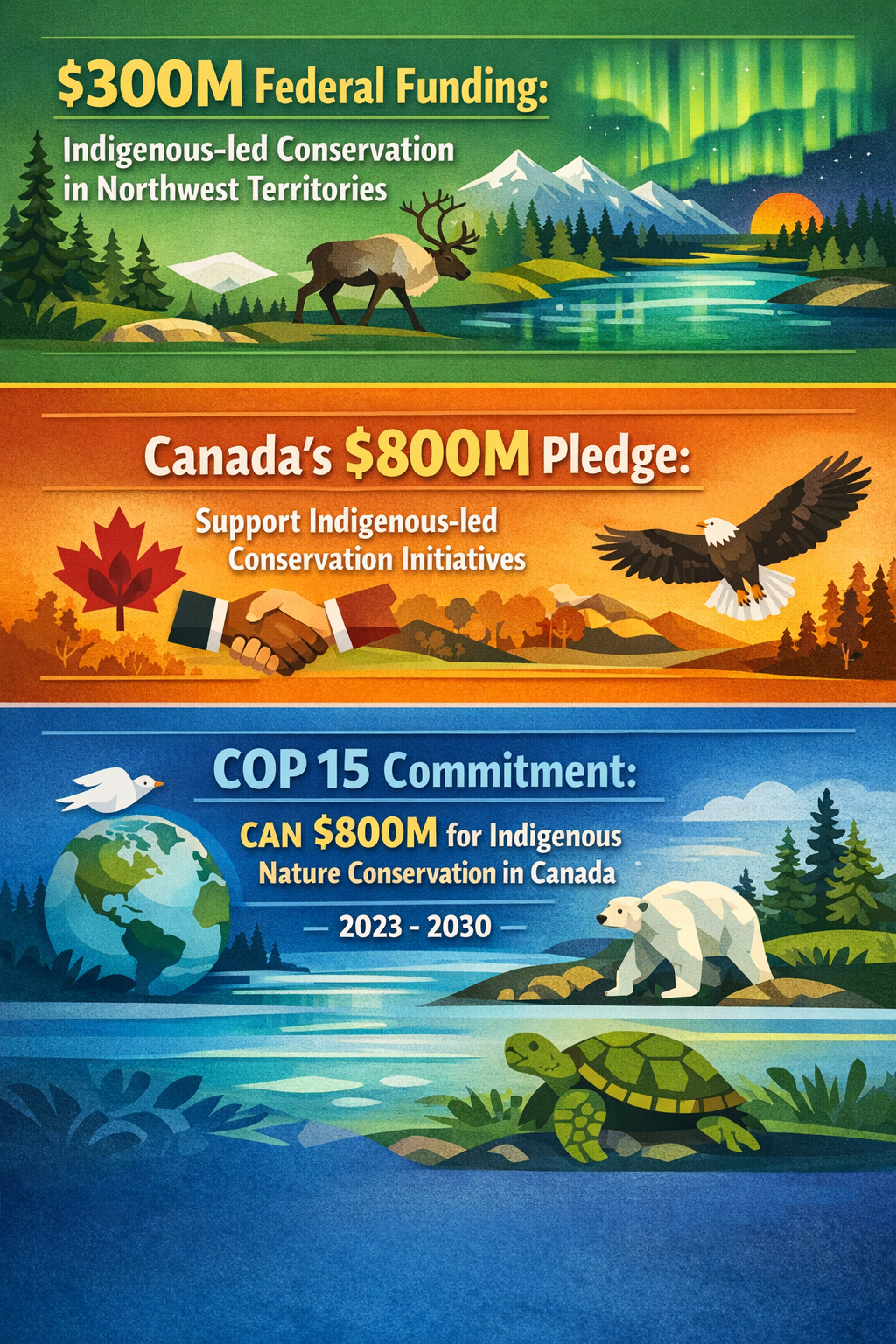
Intelligence Briefing about Protecting the Environment: Indigenous Environmental Stewardship in Canada
Emerging Trends
- Expansion and sustained funding of Indigenous Guardian programs and Indigenous-led conservation initiatives are accelerating conservation efforts nationally.
- Significant financial commitments, including Canada’s $800 million investment over seven years, are driving large-scale Indigenous-led conservation projects capable of protecting up to one million square kilometers.
- Indigenous participation models are increasingly recognized as vital, combining self-governance, economic opportunity, environmental stewardship, and community development.
Key Challenges, Opportunities, and Risks
- Challenges: Ensuring ongoing funding and institutional support; integrating diverse Indigenous governance and stewardship approaches into federal frameworks; managing potential conflicts between conservation goals and economic development.
- Opportunities: Strengthening partnerships with Indigenous communities to enhance environmental outcomes; leveraging Indigenous knowledge for innovative conservation strategies; promoting sustainable economic growth within Indigenous-led initiatives.
- Risks: Insufficient or inconsistent funding may stall progress; political or policy shifts could undermine commitments; challenges in scaling successful Indigenous models across regions.
Scenario Development
- Best-case scenario: Permanent and increased funding solidifies Indigenous-led conservation, resulting in expanded protected areas, strengthened Indigenous self-governance, and national recognition of Indigenous stewardship models.
- Moderate progress scenario: Funding levels remain stable but limited; conservation efforts progress slowly with localized success, while some Indigenous programs face operational challenges due to inconsistent policy support.
- Stagnation scenario: Funding stagnates or declines; Indigenous programs lose momentum; partnerships weaken, causing slower environmental progress and community disillusionment.
- Worst-case scenario: Withdrawal of support and funding; breakdown of Indigenous-federal collaboration; environmental degradation accelerates and Indigenous-led conservation initiatives diminish or dissolve.
Strategic Questions
- How can Transport Canada effectively integrate Indigenous environmental stewardship principles into its policies and infrastructure planning?
- What mechanisms could support stable and long-term funding to Indigenous-led conservation initiatives amid political changes?
- In what ways can Transport Canada collaborate with Indigenous governments to mutually advance economic development and environmental protection goals?
- What risks and barriers might impede scaling Indigenous participation models across different transport and environmental sectors?
Potential Actionable Insights
- Transport Canada could prioritize partnership frameworks that elevate Indigenous leadership in environmental decision-making related to transportation projects.
- Monitoring and evaluation systems could be developed collaboratively to measure the impact of Indigenous-led conservation on transportation-related environmental objectives.
- Investment strategies could incorporate co-benefits of Indigenous stewardship, such as ecosystem resilience, cultural preservation, and sustainable community development.
- Policy design could consider flexible approaches that respect Indigenous governance diversity while aligning with Transport Canada’s regulatory mandates.
Sources: Canada's Nature Action Plan, Council Fire Blog, CD Howe Institute
Briefing Created: 17/05/2026