Our Scans
·
Productivity and Technology
·
Intelligence Briefing
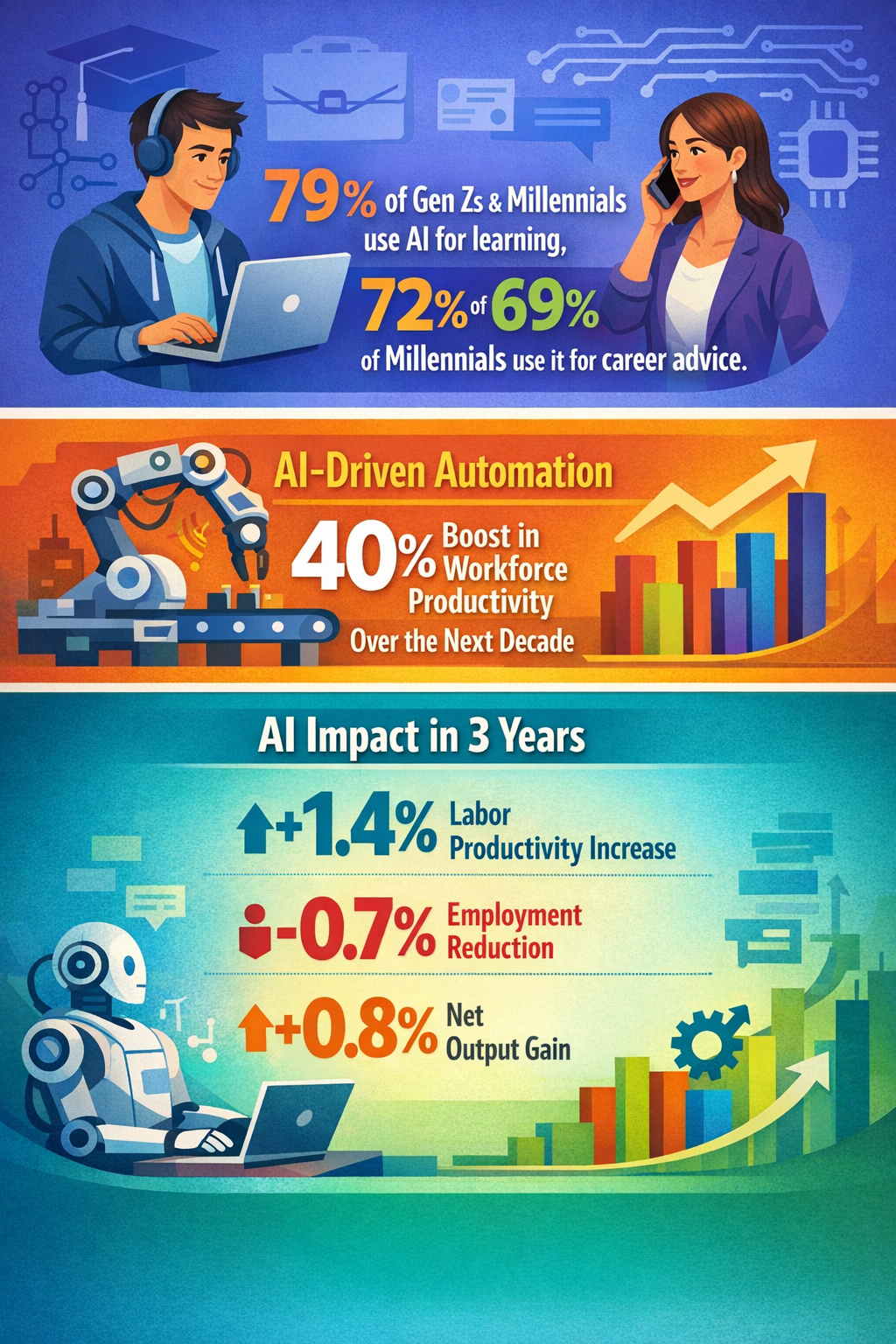
Intelligence Briefing about Productivity and Technology
Critical Trends Impacting Transport Canada
- AI-driven productivity gains: Artificial intelligence is poised to boost workforce productivity by up to 40% over the next decade, transforming operational efficiency across sectors relevant to Transport Canada (CFlowApps).
- Emergence of agentic AI workflows: AI agents are increasingly automating complex workflows, enhancing employee productivity, security, and customer personalization, potentially reshaping organizational processes (Google Cloud via InitFusion).
- Digital transformation across sectors: AI and digital technologies are driving competitiveness in transportation, autonomous vehicles, and infrastructure systems, marking a structural shift in the economy (Nasser Saidi).
- Workforce adaptation among younger professionals: Millennials and Gen Z increasingly utilize AI for career development and continuous learning, signaling a shift in talent engagement and skill acquisition (Deloitte via SEOPROFY).
- Global outlook for emerging economies: AI could act as a productivity lifeline for emerging economies with fewer job displacements than feared, suggesting potential international collaboration and development opportunities (World Bank via PromptInjection).
Key Challenges, Opportunities, and Risks
- Opportunities: Leveraging AI to modernize transportation infrastructure, enhance safety, and increase efficiency. Engaging a digitally native workforce to drive innovation.
- Challenges: Managing technology integration complexities, upskilling current employees, and safeguarding against AI-related security vulnerabilities.
- Risks: Dependence on AI infrastructures could pose systemic risks; uneven productivity gains might exacerbate regional disparities; potential workforce displacement without adequate transition programs.
Scenario Development
- Best-case: Transport Canada successfully integrates AI-driven automation, achieving substantial productivity gains while upskilling staff, enhancing safety, and driving sustainable innovation.
- Moderate progress: Partial adoption of AI technologies improves efficiency, but workforce resistance and infrastructure hurdles slow comprehensive benefits across the organization.
- Technology stagnation: Insufficient investment and regulatory uncertainty limit AI deployment, leading to missed productivity opportunities and lagging behind international peers.
- Worst-case: Overreliance on immature AI systems triggers operational failures, security breaches, and significant workforce disruption, undermining Transport Canada’s mandate and public trust.
Strategic Questions
- How can Transport Canada balance accelerated AI adoption with workforce transition and upskilling to mitigate displacement risks?
- What governance and security measures are needed to manage potential risks from expanding AI-driven automation?
- How might Transport Canada leverage emerging AI technologies to enhance safety, operational resilience, and environmental sustainability?
- In what ways could partnerships with emerging economies harness AI-enabled productivity gains to foster global transportation innovation?
Actionable Insights for Strategic Decision-Making
- Transport Canada could prioritize investments in AI infrastructure pilots to evaluate productivity improvements and operational impacts before broad rollout.
- Developing targeted AI literacy and reskilling programs could prepare current and future workforce segments for evolving job functions.
- Engagement with cross-sector stakeholders may help shape adaptive regulatory frameworks that encourage innovation while safeguarding public interests.
- Exploring collaborations with international partners could enable knowledge sharing and accelerate adoption of best practices in AI-enhanced transportation systems.
Briefing Created: 06/09/2026