Our Scans
·
The Future of Work: Productivity vs Technological Disruption
·
Intelligence Briefing
Intelligence Briefing about The Future of Work: Productivity vs Technological Disruption
Critical Trends Impacting Transport Canada
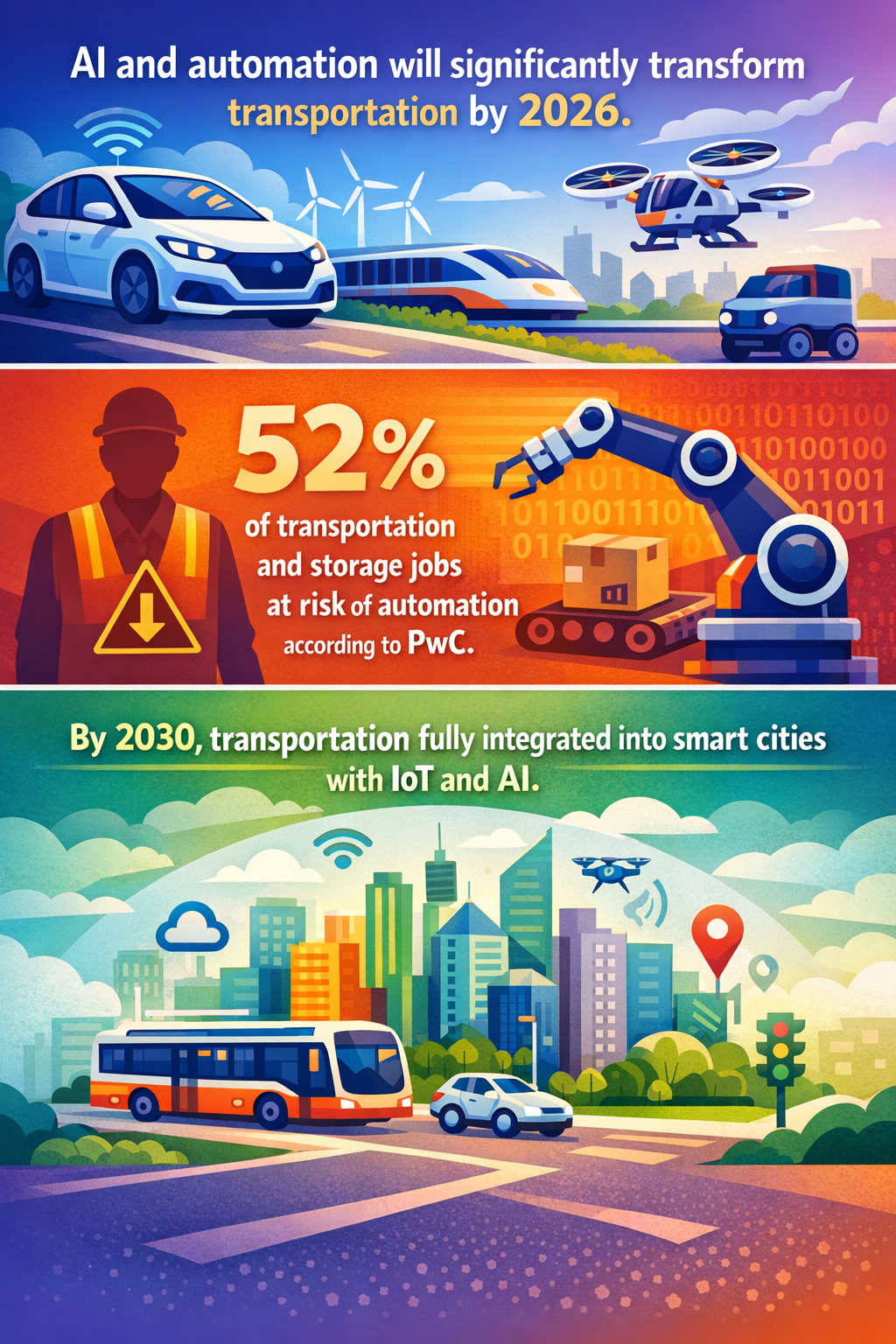
- Automation and AI Integration: Rapid advancement in AI-powered tools and automation in areas such as dispatch, logistics, and vehicle operation is transforming transport industry workflows (Loginext Solutions).
- Job Displacement Risk: Over half of jobs in transportation and storage face high exposure to automation-related displacement, potentially impacting workforce stability and structure (Piktochart).
- Sectoral Vulnerability: Transportation, storage, manufacturing, administration, and support services are particularly susceptible to digitization and automation pressures (Borneo Bulletin).
- Productivity Gains vs Workforce Adjustment: While technology drives operational efficiencies, there is concurrent risk of destabilizing traditional employment arrangements (CarsTrucksRoads).
Key Challenges, Opportunities, and Risks
- Challenges: Managing workforce transitions, mitigating job losses, ensuring equitable access to new technology-driven roles, and recalibrating regulatory frameworks.
- Opportunities: Enhancing system-wide efficiencies, improving safety through automation, and leveraging data-driven planning for optimized transportation networks.
- Risks: Accelerated unemployment in vulnerable demographics, erosion of skills in traditional transport roles, potential public resistance to autonomous systems, and cybersecurity threats in digitized infrastructure.
Scenario Development: Plausible Futures
- Best-Case Scenario: Seamless integration of AI and automation with workforce redeployment programs enable productivity gains while preserving employment levels through retraining and policy support.
- Moderate Growth Scenario: Automation adoption proceeds steadily, resulting in a mixed outcome of job displacement offset partially by creation of tech-centric roles, accompanied by gradual policy adaptation.
- Disruptive Transition Scenario: Rapid automation causes significant job losses without adequate support mechanisms, leading to workforce destabilization and social pushback against technological change.
- Worst-Case Scenario: Unmanaged automation leads to widespread unemployment in transportation sectors, exacerbating economic inequality and eroding public trust in government oversight of technology deployment.
Strategic Questions for Senior Advisors
- How can Transport Canada proactively balance technological innovation with inclusive workforce transition strategies?
- What regulatory frameworks are needed to ensure safe, ethical, and equitable deployment of automation in transportation?
- In what ways can public-private partnerships accelerate reskilling initiatives to mitigate labor market disruptions?
- How might emerging digital vulnerabilities be anticipated and mitigated within transportation infrastructure?
- What metrics should be established to monitor and evaluate the societal impact of technological disruption in the transport sector?
Actionable Insights and Considerations
- Transport Canada could develop early-warning systems to track automation adoption and employment shifts in real time.
- Strategic investment in workforce reskilling programs tailored to new technology roles could alleviate displacement risks.
- Establishing collaborative platforms with industry stakeholders may facilitate alignment on standards governing autonomous and AI-driven transport systems.
- Proactive cybersecurity measures could be integrated into infrastructure modernization to safeguard against emerging threats.
- Continuous scenario planning exercises could help anticipate varied futures and enhance adaptive policy responses.
Briefing Created: 23/08/2026