Our Scans
·
The Future of Work: Technological Disruption of Labour Markets
·
Intelligence Briefing
Intelligence Briefing about The Future of Work: Technological Disruption of Labour Markets
Critical Trends Impacting Atradius
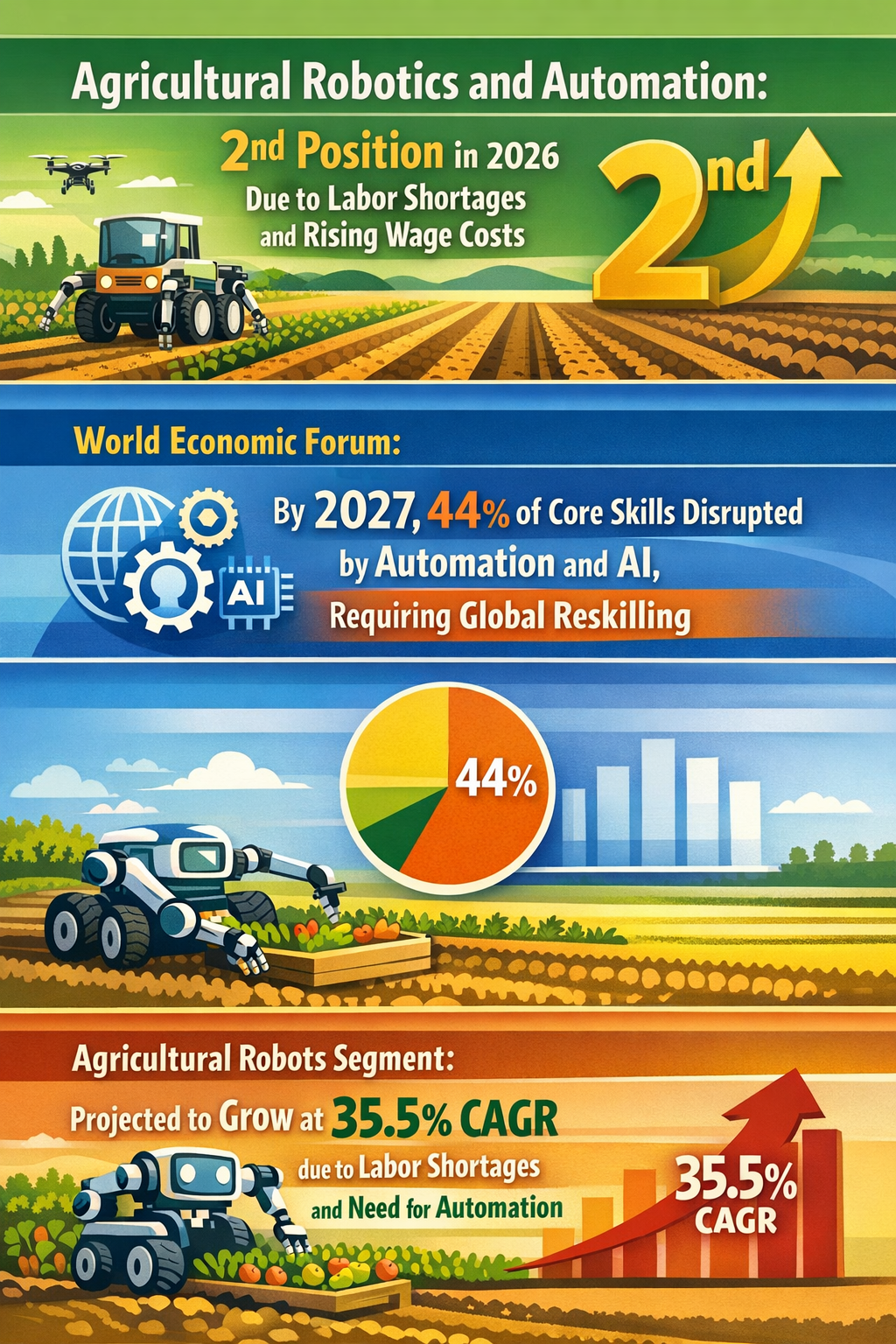
- Massive reskilling demands driven by automation and AI: approximately 44% of workers’ core skills will be disrupted by 2027, signaling a global need for systematic workforce upskilling (World Economic Forum).
- Lifelong learning models gaining traction as key to economic adaptability, illustrated by institutions like the Georgia Institute of Technology (Insight into Academia).
- Continued adoption of robotics and automation in sectors such as agriculture due to labor shortages and rising wage costs, reinforcing structural shifts in labor markets (Persistence Market Research).
- Emergence of AI-associated global risks, including job displacement, ethical concerns, and security challenges, ranked within the top 10 global risks (Drishti IAS).
Key Challenges, Opportunities, and Risks
- Challenges: Rapid skill obsolescence requiring large-scale reskilling initiatives; ethical and regulatory frameworks for AI usage; managing workforce transitions amid uncertainty.
- Opportunities: Positioning Atradius as a leader in credit insurance and risk management services for evolving labor-heavy industries; supporting clients in navigating skill shortages and automation-related risks; leveraging lifelong learning partnerships.
- Risks: Increased exposure to credit risk due to labor market disruptions; reputational risks from association with ethically ambiguous AI applications; potential volatility in sectoral employment affecting market stability.
Scenario Development
- Best-Case: Effective global collaboration on workforce reskilling and ethical AI governance leads to smooth labor market transitions and sustained economic growth.
- Moderate Growth: Partial adoption of lifelong learning programs and AI regulations mitigate job displacement, but pockets of disruption cause localized economic instability.
- Disrupted Markets: Slow or fragmented reskilling efforts combined with unchecked AI adoption result in significant job losses, ethical scandals, and increased credit defaults.
- Worst-Case: Widespread AI misuse and automation-driven unemployment trigger severe socioeconomic crises, regulatory backlash, and systemic risks to financial markets.
Strategic Questions
- How can Atradius proactively integrate emerging workforce trends into its risk assessment and credit insurance frameworks?
- What role could lifelong learning partnerships play in mitigating credit risk associated with labor market disruptions?
- How might evolving AI-related ethical and security risks impact Atradius’ client portfolios and operational resilience?
- In what ways could Atradius capitalize on automation-driven industry transformations to create new market opportunities?
- What contingency strategies could address potential volatility stemming from rapid skill displacement and labor shortages?
Actionable Insights for Strategic Decision-making
- Atradius could explore collaborations with educational institutions and technology providers to support client upskilling initiatives.
- The organization could incorporate AI risk scenarios into credit underwriting models to enhance risk prediction accuracy.
- Investment in market intelligence focused on sector-specific automation trends could enable early identification of emerging risks and opportunities.
- Developing frameworks to monitor and manage ethical risks connected to AI applications might protect reputation and foster trust.
- Scenario planning exercises focused on labor market disruption impacts could strengthen Atradius’ strategic agility.
Briefing Created: 09/08/2026