Our Scans
·
Vergrijzing
·
Intelligence Briefing
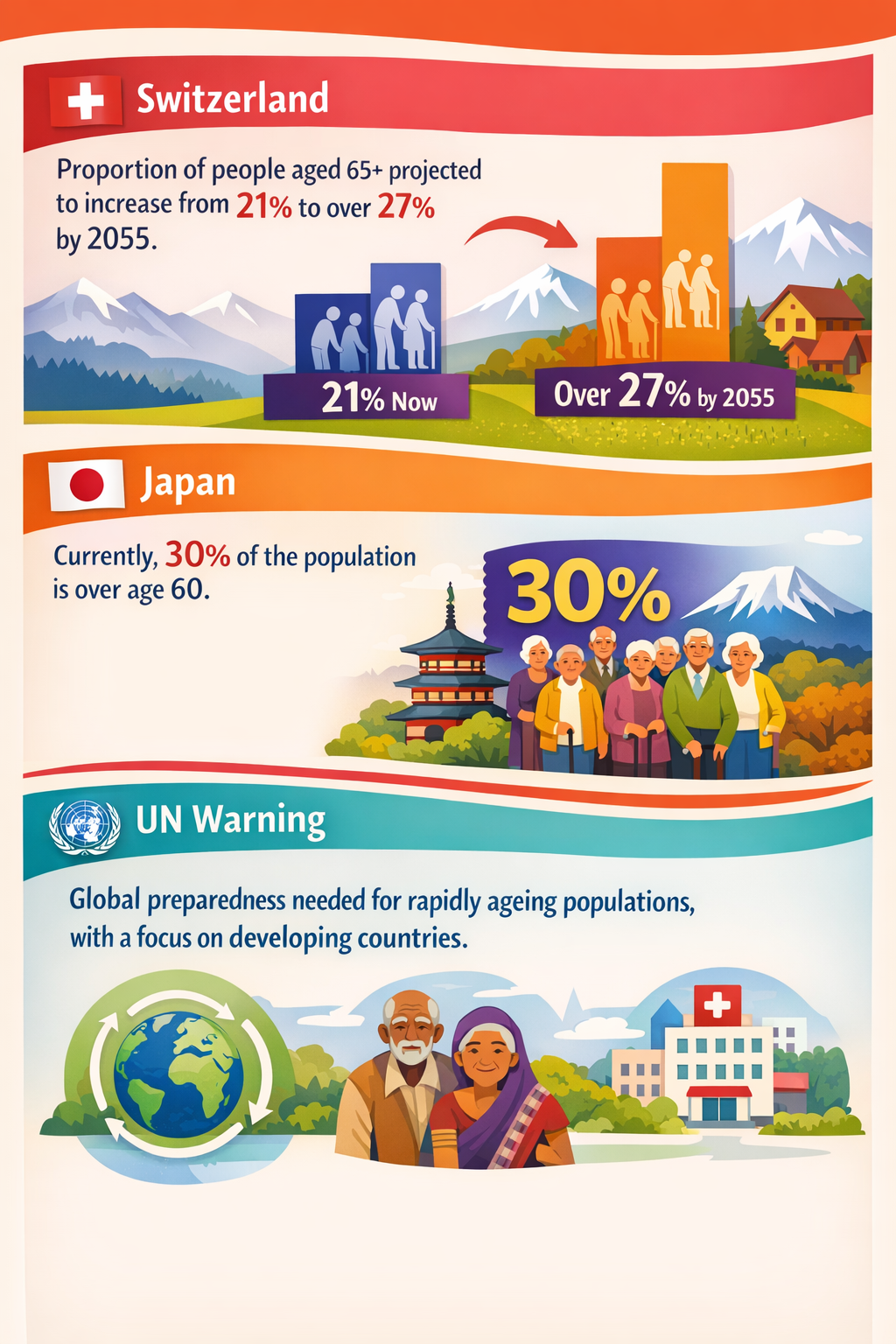
Intelligence Briefing about Vergrijzing
Critical Trends Impacting Belastingdienst
- Demographic aging is accelerating, with the population aged 65 and older increasing significantly, mirroring trends observed in Switzerland and other European countries (The Guardian).
- Labour shortages driven by declining birthrates and increasing retirement rates are putting pressure on economic growth and public finances, evident in Portugal's experience (The HR Director).
- Technological advances, especially AI, present both risks and opportunities amid rising labour costs and demographic changes, as seen in Australia's and China’s approaches (Grattan Institute), (LGT).
- Immigration policies will play a critical role in balancing demographic shifts and sustaining labour markets, given the need to offset declining domestic workforce sizes (The Guardian).
Key Challenges, Opportunities, and Risks
- Challenges: Shrinking workforce increases strain on tax revenues and social security systems; labour shortages could slow economic growth.
- Opportunities: Leveraging AI and automation to offset workforce gaps and improve efficiency; reforming immigration to attract critical skills.
- Risks: AI-driven job displacement impacting younger populations disproportionately; political resistance to immigration altering demographic solutions.
Scenario Development
- Best-case: Effective integration of AI and automation mitigates labour deficits; immigration policies accepted and aligned; social systems remain robust.
- Moderate-case: Labour shortages persist but are partly managed with technology; moderate immigration restrictions slow workforce growth; public finances strained but stable.
- Challenging-case: Political resistance blocks immigration expansion; AI adoption lags behind; workforce shortages lead to slower economic growth and increased social pressure.
- Worst-case: Sharp demographic decline combined with ineffective AI adoption and restrictive immigration; significant tax base erosion and social system crises.
Strategic Questions
- How can Belastingdienst strategically leverage AI and automation to sustain tax collection efficiency amid an ageing workforce?
- What immigration frameworks could be developed to balance demographic needs with social and political acceptability?
- How might shifting demographic patterns impact long-term fiscal sustainability, and what adaptive policies could mitigate these effects?
- What measures could be implemented to address the socio-economic risks posed by AI-driven job displacement among younger populations?
Potential Actionable Insights
- Belastingdienst could explore collaborations with technology developers to pilot AI-driven tax administration tools that address labour shortfalls.
- It could analyze demographic data to anticipate future revenue changes and adapt fiscal models accordingly.
- Engaging in policy dialogues around immigration trends might help the organization forecast impacts on tax base and compliance dynamics.
- Proactive communication strategies could be designed to manage public expectations regarding the demographic transitions and related fiscal policies.
Briefing Created: 24/06/2026