Our Scans
·
Tax and compliance
·
Intelligence Briefing
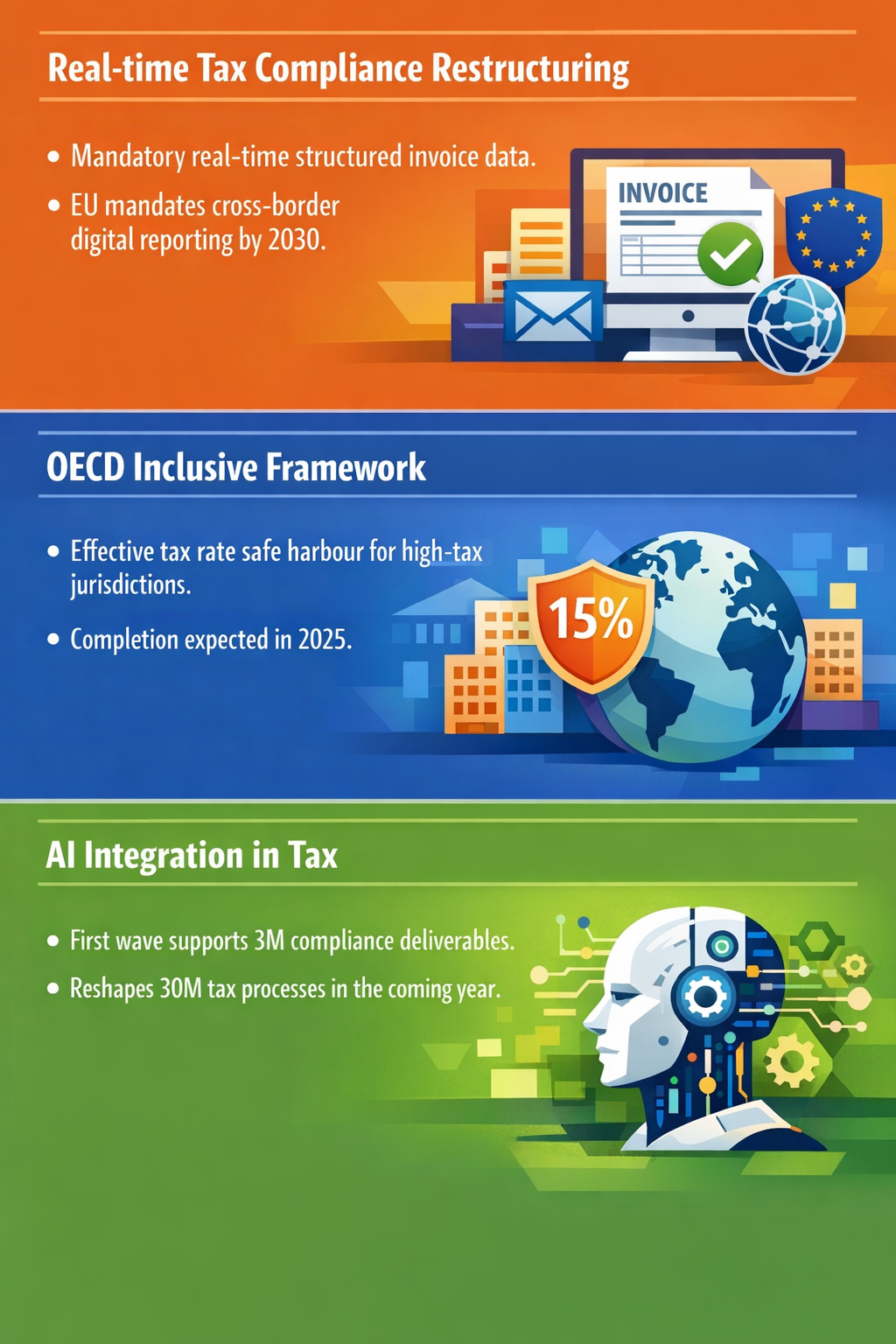
Intelligence Briefing about Tax and Compliance
Critical Trends Impacting Belastingdienst
- Real-time Tax Compliance: Increasing global adoption of real-time structured invoice data submission is transforming tax functions, with the EU targeting mandatory cross-border digital reporting by 2030 (Thomson Reuters).
- Enhanced Voluntary Disclosure Programs: Entrepreneurs and taxpayers are leveraging optimized voluntary disclosure channels to securely settle undisclosed revenues, potentially reducing audits or litigation risks, as seen in recent IRS initiatives in the US (Mondaq).
Key Challenges, Opportunities, and Risks
- Challenges: Implementing and maintaining sophisticated digital infrastructure to support real-time, cross-border data flows; adapting regulatory frameworks to manage diverse international reporting standards and data privacy concerns.
- Opportunities: Harnessing real-time data can significantly improve detection of tax evasion and increase compliance efficiency; voluntary disclosure mechanisms could foster taxpayer cooperation and reduce enforcement costs.
- Risks: Potential cybersecurity vulnerabilities associated with handling high volumes of sensitive digital data; resistance from taxpayers or businesses to new, possibly burdensome reporting requirements; cross-jurisdictional complexity creating loopholes or compliance gaps.
Scenario Development
- Best-Case: Seamless integration of real-time EU-wide reporting standards coupled with high taxpayer trust in voluntary disclosure programs, resulting in enhanced compliance and reduced enforcement costs.
- Moderate Success: Partial implementation of real-time reporting with phased adoption across member states; voluntary disclosure programs gain moderate traction but face challenges in reaching certain taxpayer segments.
- Fragmented Compliance: Diverse interpretations or delays in adopting cross-border digital reporting; voluntary disclosure uptake remains low due to mistrust or inadequate communication, leading to persistent tax gaps.
- Worst-Case: Cybersecurity breaches undermine the credibility of digital tax systems; complex regulations create confusion and non-compliance spikes; voluntary disclosure programs fail to attract participation, increasing tax evasion and enforcement costs.
Strategic Questions
- How can Belastingdienst effectively balance transparency and privacy in implementing real-time cross-border reporting?
- What strategies could increase taxpayer engagement with voluntary disclosure programs to maximize compliance?
- In what ways might emerging digital infrastructures expose the organization to cyber risks, and how could these be mitigated?
- How might international collaboration evolve to harmonize standards and enforcement across borders?
Potential Actionable Insights
- Investing proactively in secure, scalable IT systems could support compliance with upcoming real-time reporting mandates while safeguarding data integrity.
- Developing clear, accessible communication strategies could encourage voluntary disclosures and improve taxpayer trust.
- Exploring partnerships with international tax authorities could align standards and share best practices, reducing operational friction.
- Scenario planning exercises could be institutionalized to anticipate and prepare for regulatory and technological shifts.
Briefing Created: 20/05/2026