Our Scans
·
Fakes and misinformation
·
Intelligence Briefing
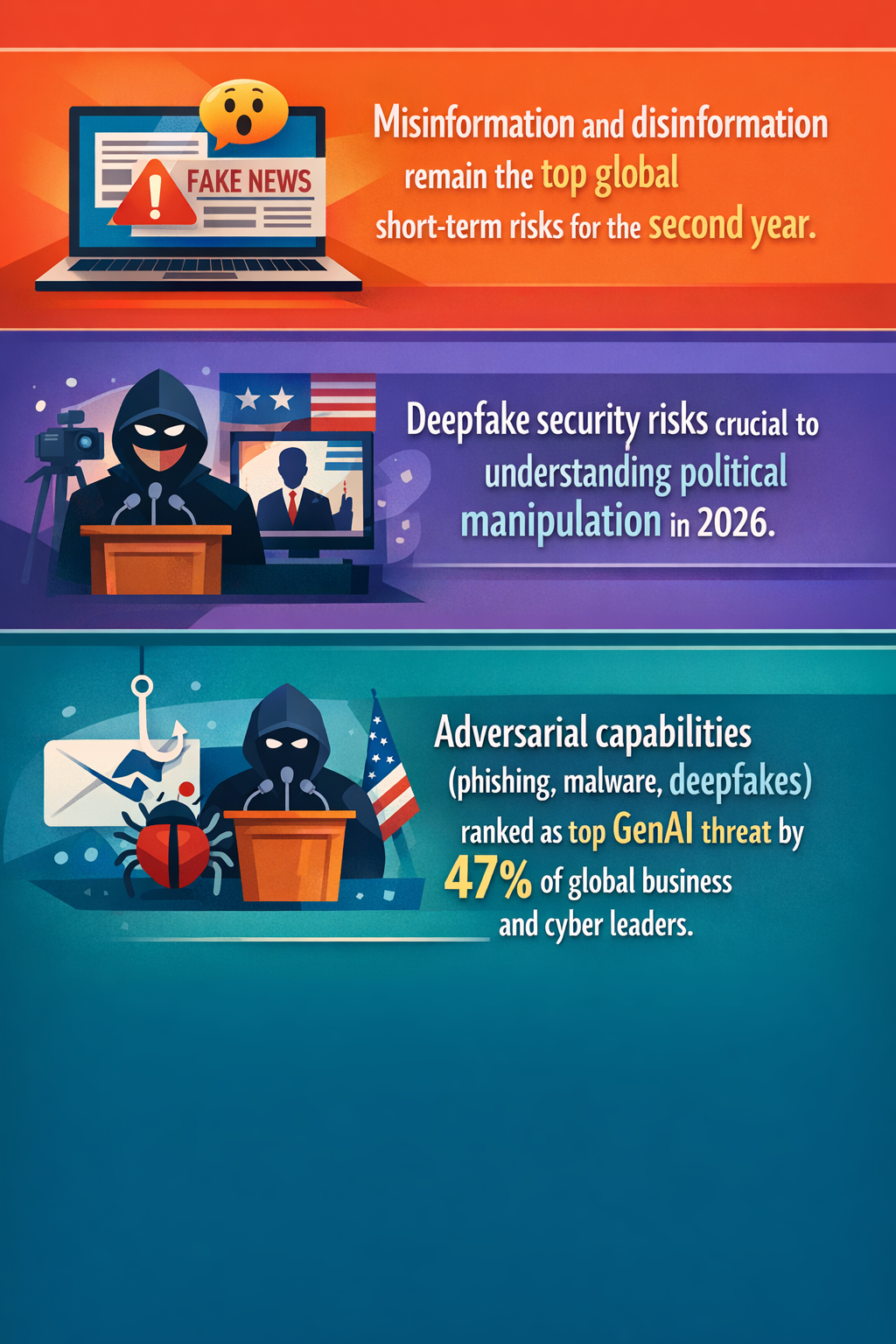
Intelligence Briefing about Fakes and Misinformation
Critical Trends Impacting Belastingdienst
- Proliferation of deepfakes and synthetic media: Advances in AI-driven synthetic content generation increase the risk of fabricated evidence and manipulated communications affecting tax compliance and public trust (Center for Internet Security).
- Escalation of misinformation and disinformation: Ranked as the number one short-term global risk, misinformation undermines public confidence in institutions and complicates communication strategies (World Economic Forum).
- Declining trust fueled by misinformation: Public skepticism, notably in health contexts such as vaccine hesitancy, signals a broader risk of distrust toward government agencies, including tax authorities (Council on Foreign Relations).
- Convergence of misinformation with emerging global threats: Misinformation interlinks with wider risks such as extreme weather and AI-related challenges, complicating response and policy coordination (Springer).
Key Challenges, Opportunities, and Risks
- Challenges: Detecting and counteracting sophisticated synthetic media threats; managing erosion of public trust amid prevalent misinformation; adapting communication tactics to rapidly evolving digital misinformation environments.
- Opportunities: Leveraging AI and analytics to develop improved detection mechanisms for deepfakes; strengthening partnerships with technology and public health sectors to coordinate misinformation defenses; enhancing transparency to rebuild trust.
- Risks: Misuse of synthetic media to facilitate tax fraud or identity manipulation; mass misinformation campaigns undermining Belastingdienst’s legitimacy; increased politicization of tax compliance affecting enforcement efficacy.
Scenario Development
- Best-Case Scenario: Effective cross-sector collaboration and advanced AI tools enable timely detection of misinformation and synthetic media, maintaining high public trust and ensuring strong tax compliance.
- Moderate Scenario: Misinformation remains widespread but is partially managed through improved communication strategies; Belastingdienst’s credibility fluctuates but resilience efforts limit compliance drops.
- Challenging Scenario: Deepfake and synthetic media threats grow more sophisticated and frequent; public trust declines significantly, resulting in tax evasion increase and heightened operational costs for monitoring and enforcement.
- Worst-Case Scenario: Misinformation campaigns severely erode institutional trust; synthetic media is weaponized for widespread fraud and disruption; Belastingdienst struggles to respond effectively, destabilizing tax revenue streams.
Strategic Questions
- How can Belastingdienst integrate emerging AI-based detection tools to proactively identify and mitigate synthetic media threats?
- What strategies could effectively rebuild and maintain public trust amid escalating misinformation risks?
- In what ways can inter-agency and public-private partnerships be leveraged to counter misinformation impacting tax compliance?
- How might the politicization of public health and other social issues influence perceptions of Belastingdienst, and how can the agency navigate this landscape?
Actionable Insights and Considerations
- Belastingdienst could invest in AI-driven monitoring technologies to detect and flag deepfakes and misinformation impacting tax operations early.
- Developing transparent communications frameworks could help counter misinformation and reinforce institutional credibility.
- Establishing collaborative networks with technology firms, health agencies, and emergency management might improve response capabilities to misinformation crises.
- Scenario planning exercises could prepare the agency for varying degrees of misinformation impact, enabling more adaptive strategy formulation.
Briefing Created: 24/06/2026