Our Scans
·
Labour Shortages in the Trucking Industry
·
Intelligence Briefing
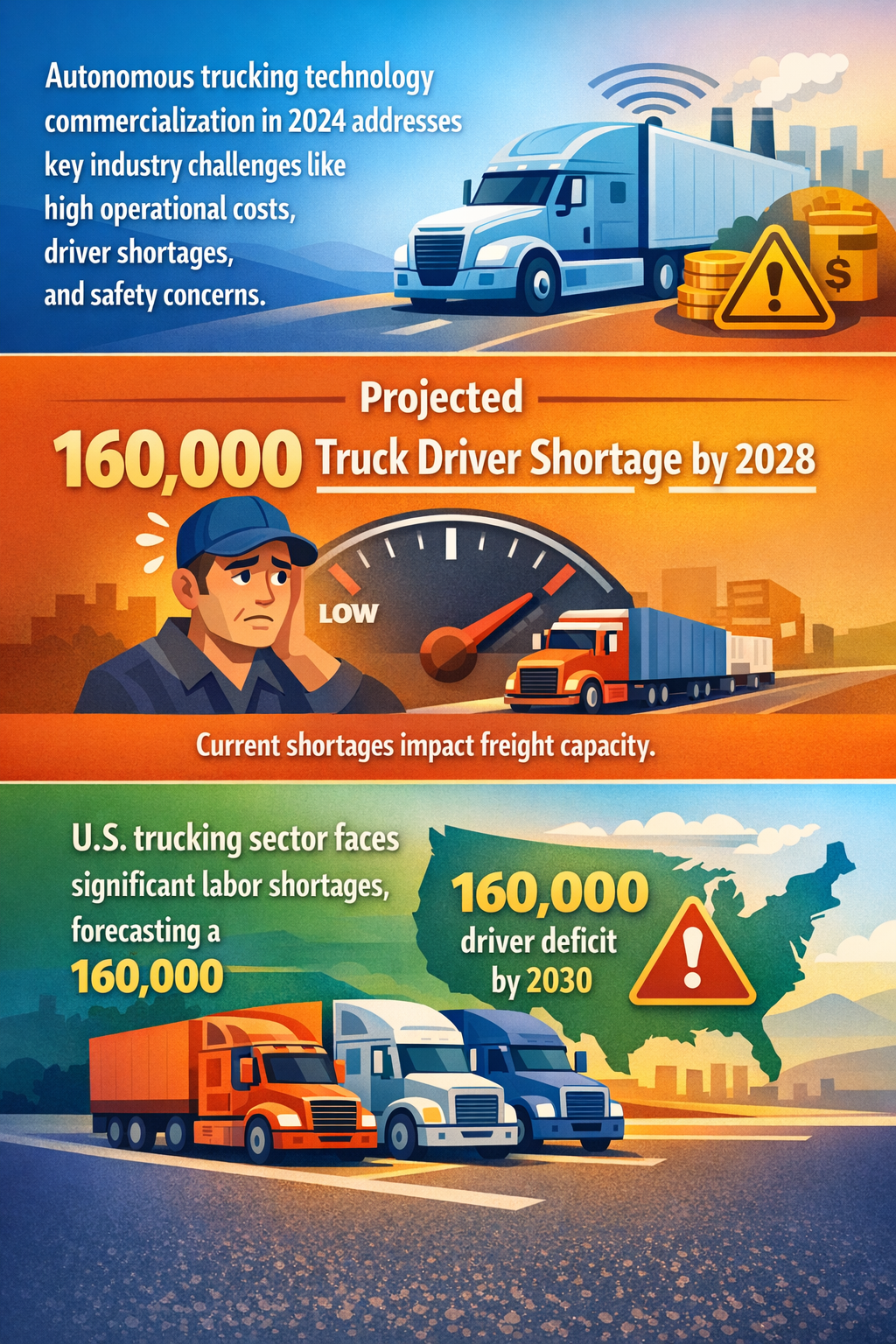
Intelligence Briefing about Labour Shortages in the Trucking Industry
Critical Trends Impacting Transport Canada
- Persistent driver shortages, especially in long-haul trucking, driven by challenging working conditions such as extended time away from home.
- Growing demand for freight transport continues to strain workforce capacity, highlighting recruitment and retention difficulties.
- Technological shifts towards autonomous trucking and logistics innovation are emerging but are not yet mature enough to offset labour deficits.
Key Challenges, Opportunities, and Risks
- Challenges: Recruitment barriers, retention issues, aging workforce, and the impact of lifestyle factors on driver supply.
- Opportunities: Leveraging automation and digital tools to improve efficiency; enhancing driver work-life balance through policy innovation.
- Risks: Continued shortages may disrupt supply chains, increase transportation costs, and impact economic competitiveness.
Scenario Development
- Best-Case: Successful integration of autonomous trucking technology complements a stabilized and younger driver workforce attracted by improved conditions and incentives.
- Moderate: Pilot automation reduces some workload but driver shortages persist, mitigated by targeted recruitment and retention programs.
- Challenging: Driver shortages deepen due to lifestyle factors remaining unaddressed; automation adoption is slow and insufficient to fill gaps.
- Worst-Case: Severe labour shortages combined with delayed technological adoption cause major freight disruptions and economic ripple effects.
Strategic Questions for Senior Policy Advisors
- How can Transport Canada facilitate policies that improve recruitment and retention while addressing driver lifestyle concerns?
- What role should autonomous vehicle regulation and support play in mitigating labour shortages?
- How could cross-sector partnerships enhance workforce development and technology integration in trucking?
- What contingency measures should be established to manage potential supply chain disruptions from labour deficits?
- How might shifts in labour market dynamics impact Transport Canada’s long-term transportation strategy?
Potential Actionable Insights
- Investments in workforce data analytics could identify patterns and inform targeted retention policies.
- Facilitating pilot projects for autonomous freight transport could provide critical operational insights.
- Engagement with industry stakeholders could uncover innovative approaches to improve driver work-life balance.
- Scenario planning exercises could prepare Transport Canada for varying future labour market conditions.
Briefing Created: 05/07/2026