Our Scans
·
SpaceTech
·
Intelligence Briefing
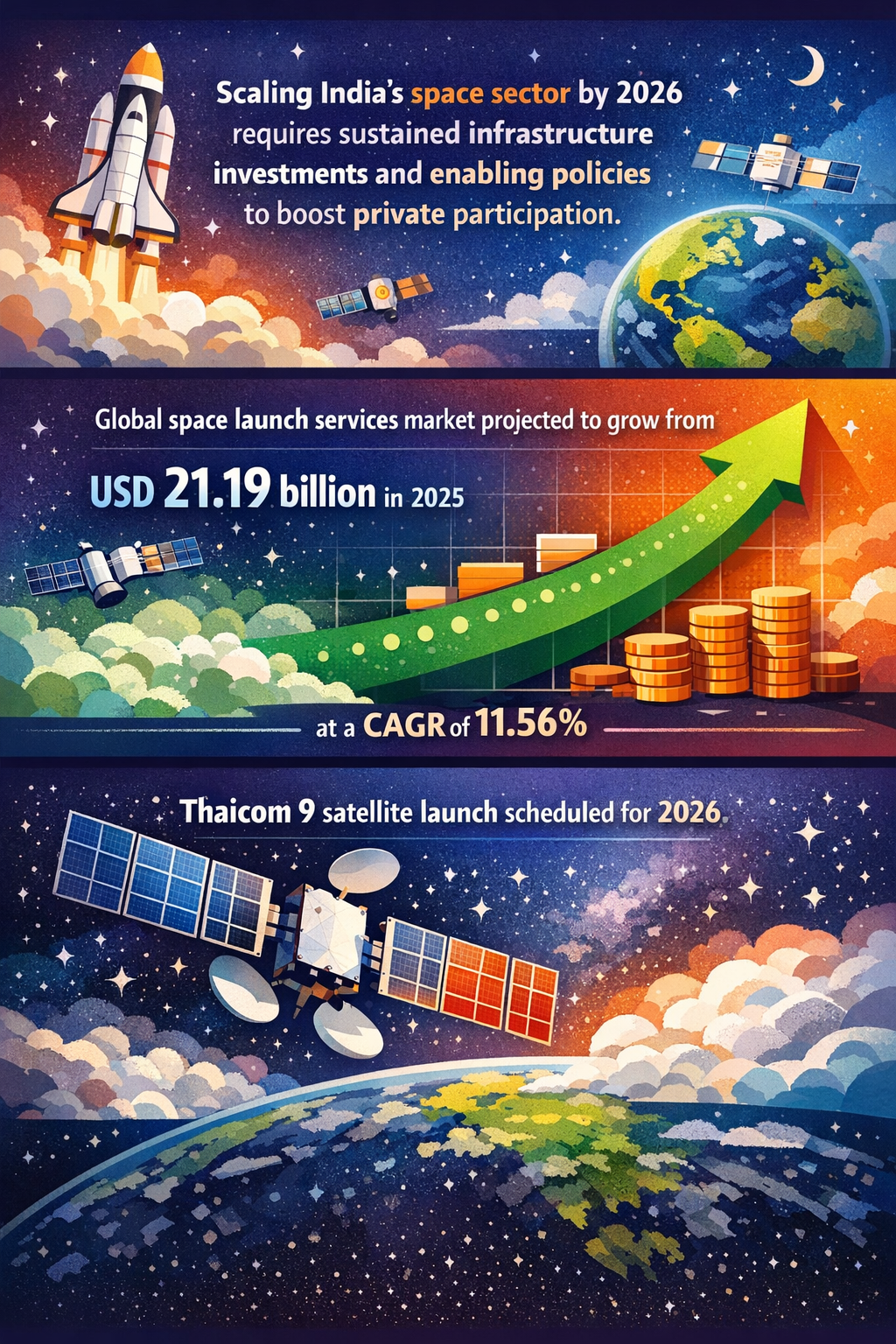
Intelligence Briefing about SpaceTech
Critical Trends Impacting Infosys
- Integration of generative AI with satellite development is emerging as a key technological advancement to accelerate design and innovation (NEC Press Release).
- Asia-Pacific region, led by China, India, and Japan, is experiencing rapid growth in space programs and commercial satellite deployments (Yahoo Finance).
- China's satellite technology transfer to Africa is fostering capacity-building through alternative international cooperation models, presenting new geopolitical vectors (Space in Africa).
- SpaceX's technological innovations and market valuation point to shifting industry dynamics and heightened competition in space exploration and satellite markets (Techstory).
- Policy and infrastructure investment remain critical to scaling national space capabilities, exemplified by India's drive to become a leading space tech power (ETV Bharat).
Key Challenges, Opportunities, and Risks
- Challenge: Keeping pace with rapid technological innovations such as reusable spacecraft components and AI integration could strain current R&D and partnerships.
- Opportunity: Leveraging generative AI for satellite development could enhance product cycles, reduce costs, and position Infosys as a technology enabler in SpaceTech.
- Risk: Geopolitical shifts, especially China’s expanding influence in Africa, may disrupt market access or create competitive tensions.
- Opportunity: Expansion in APAC's space sector and private participation presents new markets for digital and systems integration services.
- Challenge: Adapting business models to support evolving policy frameworks and infrastructure demands in emerging space nations.
Scenario Development
- Best-Case: Infosys successfully integrates AI-driven satellite tech solutions, partners with leading APAC space programs, and capitalizes on disrupting legacy competitors aligned with supportive global policies.
- Moderate Growth: Incremental adoption of generative AI in satellite development, steady APAC market expansion, and manageable geopolitical tensions enable moderate business growth and diversification.
- Geopolitical Disruption: Increased competition and geopolitical tensions from China's influence in Africa and elsewhere create fragmented markets, limiting Infosys’s access and requiring more nuanced risk management.
- Worst-Case: Technology adoption lags amid policy uncertainty; rising protectionism and intensified competition from well-funded players like SpaceX undermine Infosys’s position in the space technology ecosystem.
Strategic Questions for Senior Advisors
- How can Infosys effectively leverage generative AI and satellite technology integration to establish a competitive advantage in global SpaceTech markets?
- What strategic partnerships or investments are necessary to navigate and capitalize on rapid growth within the Asia-Pacific space sector?
- How should Infosys prepare for and mitigate risks arising from geopolitical shifts, especially regarding China's influence in emerging markets?
- In what ways can Infosys align with evolving space policies and infrastructure demands to enhance private sector participation and innovation?
- What capabilities must Infosys develop to respond to disruptive innovations like reusable spacecraft components shaping the future of space exploration?
Potential Actionable Insights
- Infosys could prioritize investments in AI-driven satellite software development capabilities to differentiate offerings and reduce time-to-market.
- The company could explore collaborations with emerging space nations and private sector leaders in APAC to expand its footprint in fast-growing markets.
- Infosys could implement scenario-based risk planning to proactively address geopolitical uncertainties affecting supply chains and market access.
- Developing agile consulting services aligned with evolving government policies in space tech could position Infosys as a trusted advisor in infrastructure scaling.
- Infosys could monitor and adapt to breakthrough technologies, such as reusable heat shields, to anticipate new service needs within the space ecosystem.
Briefing Created: 14/05/2026