Our Scans
·
Semiconductors
·
Intelligence Briefing
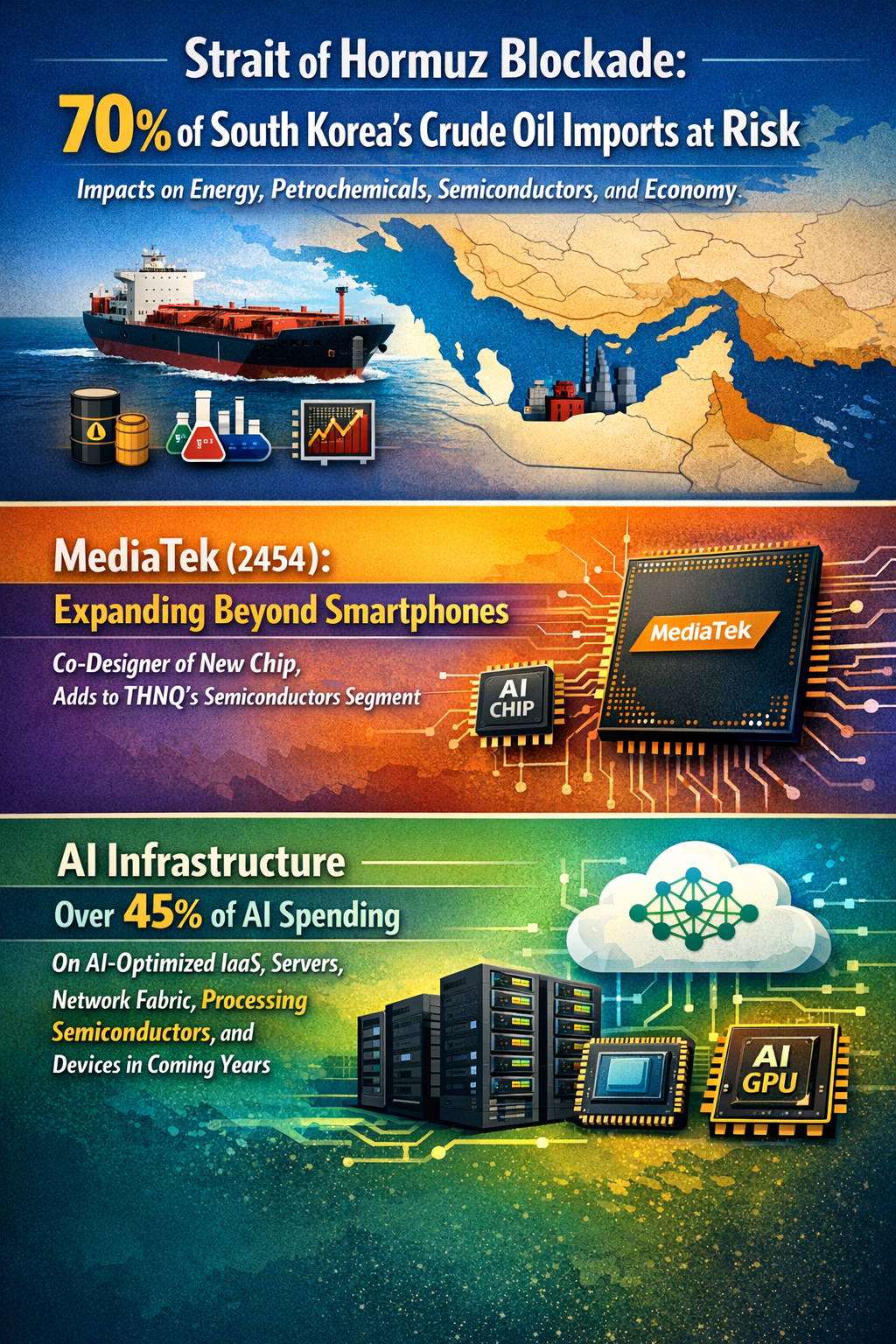
Intelligence Briefing about Semiconductors
Critical Trends Impacting Infosys
- Expansion of semiconductor applications beyond smartphones into AI infrastructure, autonomous systems, and defense technologies, driven by co-design efforts like those of Taiwan’s MediaTek (ETF Trends).
- Geopolitical vulnerabilities in key shipping lanes such as the Strait of Hormuz are creating supply chain disruptions and scarcity premiums affecting semiconductor and energy sectors globally (CSIS, Financial Content).
- Rising demand for trusted semiconductor suppliers amid tightening global technology controls, with countries like South Korea gaining opportunity in AI, semiconductors, robotics, and more (Sands Capital).
- Persistent technological gaps in high-end semiconductors and advanced sectors remain a challenge, particularly regarding Chinese firms’ capabilities and industrial policies (US Chamber).
- Significant investments in AI, quantum computing, advanced semiconductors, and telecommunications by China are reshaping economic and military advantage landscapes (CEPA).
- AI infrastructure demand is set to drive more than 45% of AI spending, emphasizing the importance of semiconductor innovation in AI-optimized hardware (Webiano Digital).
- Potential relaxation of technology controls by Washington towards China could alter competitive dynamics in semiconductor and AI technology sectors (Fox Business).
Key Challenges, Opportunities, and Risks
- Challenges: Supply chain vulnerabilities; technological gaps in high-end semiconductor manufacturing; geopolitical tensions affecting trade and investment flows.
- Opportunities: Leveraging rising global demand for AI and semiconductor infrastructure; partnering with trusted suppliers across emerging tech sectors; capitalizing on diversification beyond traditional consumer electronics.
- Risks: Escalating geopolitical conflicts impacting critical shipping lanes and trade; technology transfer restrictions and regulations; rapid innovation cycles requiring continuous R&D investment.
Scenario Development: Four Plausible Futures
- Best-Case Scenario: Global cooperation stabilizes supply chains; technology controls ease, enabling open innovation; Infosys leverages AI infrastructure growth, expanding market share in semiconductor services.
- Optimistic Scenario: Regional partnerships strengthen with trusted suppliers (e.g., South Korea, Taiwan); supply chains remain resilient with minimal disruption; Chinese investments spur competitive innovation without aggressive protectionism.
- Challenging Scenario: Continued geopolitical tensions and partial blockades increase supply scarcity; stricter technology export controls slow cross-border collaboration; Infosys faces pressure to adapt to segmented markets.
- Worst-Case Scenario: Severe disruptions in key trade routes cause critical semiconductor shortages; technology decoupling accelerates with heightened restrictions; Infosys risks losing access to key markets and innovation ecosystems.
Strategic Questions for Senior Policy Advisors and Strategists
- How can Infosys build resilience in semiconductor-related supply chains amid escalating geopolitical risks?
- What role could Infosys play in promoting trusted partnerships and diversifying semiconductor technology sources?
- How might evolving AI infrastructure demands reshape Infosys’s strategic investments and service offerings?
- What approaches could Infosys consider to navigate potential shifts in global technology controls and regulatory environments?
- In what ways could Infosys leverage emerging semiconductor and AI advancements to gain competitive advantage in defense and autonomous sectors?
Potential Actionable Insights
- Infosys could enhance strategic collaborations with semiconductor and AI hardware providers in geopolitically stable regions to mitigate supply chain risks.
- Investing in R&D related to AI-optimized infrastructure and advanced semiconductor applications could position Infosys at the forefront of emerging market demands.
- Developing flexible service models capable of adapting to shifting regulatory landscapes could reduce risks associated with technology export controls.
- Monitoring geopolitical developments around critical shipping lanes and trade chokepoints could inform proactive risk management and contingency planning.
- Engaging in policy dialogues and public-private partnerships might enable Infosys to shape favorable industry standards and technology transfer practices.
Briefing Created: 09/06/2026