Our Scans
·
AR/VR/XR
·
Intelligence Briefing
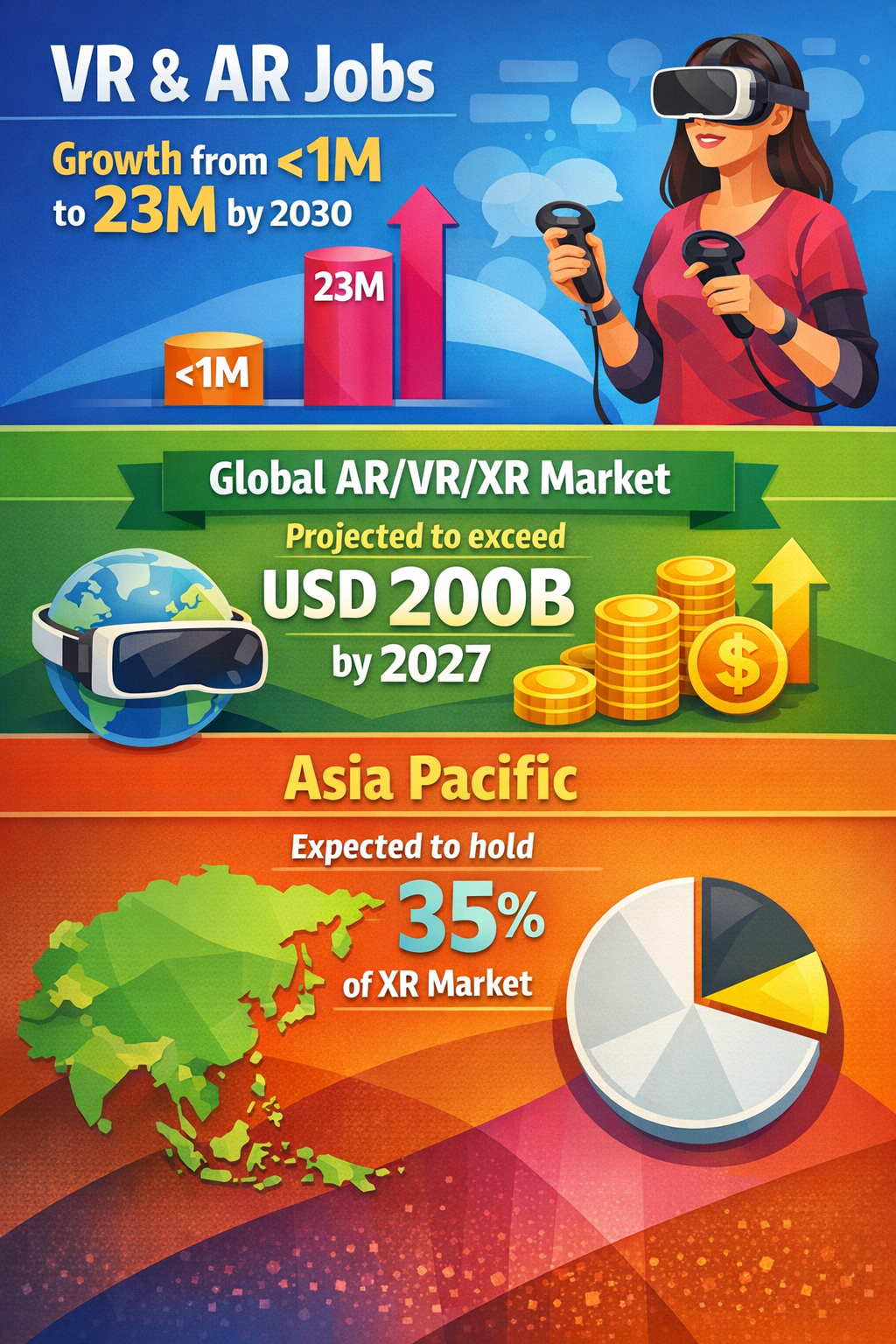
Intelligence Briefing about AR/VR/XR
Critical Trends Impacting Infosys
- North America is set to lead the XR market with a 46.1% share by 2026, driven by early adoption and a mature ecosystem of developers and enterprise providers (OpenPR).
- Jobs augmented by AR and VR technologies are projected to surge from fewer than 1 million to 23 million by 2030, indicating significant workforce transformation (SQ Magazine).
- Major investments by industry leaders, such as Facebook’s planned $10 billion spend in 2026 on Reality Labs for AR/VR hardware, software, and content, underscore aggressive market expansion and technology innovation (VirtualSpeech).
- The healthcare sector is increasingly adopting AR/VR for virtual care delivery, enhancing efficiency and accessibility of digital health services worldwide (Market.US).
Key Challenges, Opportunities, and Risks
- Challenges: Rapid skill evolution needed for workforce readiness, high R&D and capital expenditure demands, and managing integration complexity across industries.
- Opportunities: Leveraging Infosys’ digital services to lead XR-enabled transformation in enterprise training, healthcare, and metaverse platforms; strategic partnerships with hardware and content providers.
- Risks: Technology adoption disparities across regions, potential regulatory uncertainties around data privacy and immersive experiences, and intensified competition from deep-pocketed tech giants.
Scenario Development
- Best-Case: Widespread global adoption accelerates, Infosys becomes a preferred partner for XR enterprise solutions in dominant markets; successful entry into healthcare and metaverse sectors drives growth.
- Moderate Growth: Adoption concentrated mainly in North America with incremental penetration elsewhere; Infosys expands XR capabilities but faces moderate competition and regulatory hurdles.
- Stagnation Scenario: Slower-than-expected technology adoption and high costs delay market growth; Infosys struggles to capture significant market share amid fragmented demand and cautious clients.
- Worst-Case: Regulatory crackdowns on immersive data and privacy stall development; major players pivot away from XR investments causing industry contraction; Infosys faces shrinking opportunities and rising operational risks.
Strategic Questions
- How can Infosys strategically position itself to lead XR-enabled digital transformation in key sectors such as healthcare and enterprise training?
- What partnerships or acquisitions could accelerate Infosys’ capabilities in AR/VR hardware, software, and content ecosystems?
- How should Infosys anticipate and mitigate regulatory and ethical risks associated with immersive technologies?
- What workforce development strategies could Infosys deploy to build and retain XR talent in a rapidly evolving jobs landscape?
- How can Infosys balance investments in emerging XR markets against potential regional disparities and technology adoption rates?
Actionable Insights for Strategic Decision-Making
- Infosys could explore targeted investments in XR training and healthcare digital solutions to capitalize on sector-specific growth.
- Developing alliances with leading XR hardware and content innovators could yield early mover advantages.
- Implementing agile talent upskilling programs could strengthen Infosys’ capacity to address the projected surge in XR-enhanced jobs.
- Monitoring evolving regulatory landscapes closely could enable preemptive compliance readiness and risk mitigation.
- Adopting a phased market entry approach may allow better resource allocation aligned with regional adoption trends.
Briefing Created: 31/08/2026