Our Scans
·
BCI/HCI
·
Intelligence Briefing
Intelligence Briefing about BCI/HCI
Critical Trends Impacting Infosys
- Rapid growth of China’s BCI industry driven by strong government support, creating competitive pressure and partnership opportunities (MIT Technology Review).
- Advancements in user-friendly BCI design, including intuitive training protocols and ergonomic hardware, lowering barriers for mass consumer adoption (PMC NCBI).
- Next-gen BCI capabilities evolving from passive neural reading to precise neural writing, enabling artificial sensory experiences indistinguishable from natural perception (Neuroba).
- Increasing emphasis on ethical, security, and regulatory frameworks as BCI systems become more consumer-facing and integrated with daily life (Redline Group).
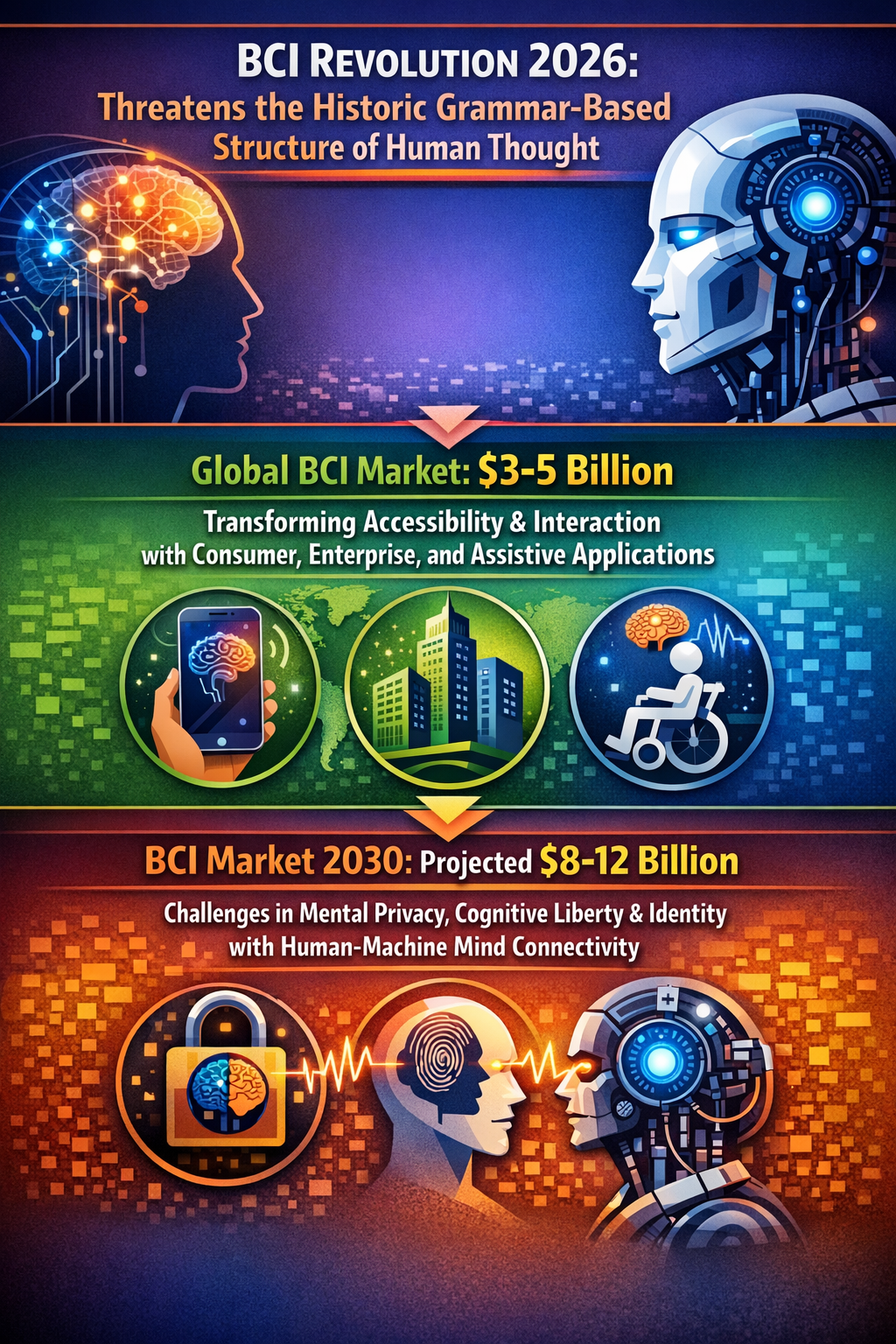
- Existential and societal challenges arising from BCI's potential to redefine human cognition and communication norms, possibly disrupting long-established frameworks of thought (The Cerebral AI).
- Severe security risks including potential mass manipulation through standardized BCI systems absent robust protective measures (Medium).
Key Challenges, Opportunities, and Risks
- Challenge: Navigating ethical concerns and regulatory uncertainty while developing scalable BCI solutions.
- Opportunity: Leveraging advances in intuitive user interfaces to pioneer consumer-friendly BCI applications and services.
- Risk: Exposure to cybersecurity threats that could undermine user trust and cause large-scale harm.
- Challenge: Competing with state-driven initiatives, particularly from China, in a rapidly evolving global BCI ecosystem.
- Opportunity: Engaging cross-disciplinary expertise (neuroscience, ethics, engineering) to differentiate offerings and lead responsible innovation.
Scenario Development
- Best-Case Scenario: Global regulatory frameworks align; Infosys leads in secure, ethical BCI platforms with high consumer adoption and diversified partnerships worldwide.
- Optimistic Scenario: Widespread user-friendly BCI tech gains traction, but geopolitical tensions slow collaboration; Infosys capitalizes on selective markets with tailored solutions.
- Challenging Scenario: Security breaches erode public trust; consumer adoption stalls; Infosys pivots to enterprise and defense sectors focusing on hardened, niche applications.
- Worst-Case Scenario: Rapid proliferation of unregulated BCI devices causes ethical crises and regulatory clampdowns; Infosys faces reputational damage and shrinking markets.
Strategic Questions
- How can Infosys position itself to lead in both technological innovation and ethical governance within the evolving BCI landscape?
- What risk mitigation strategies could be implemented to safeguard against cybersecurity threats unique to BCI systems?
- In what ways might Infosys leverage interdisciplinary collaboration to accelerate user-centric BCI solutions that drive adoption?
- How should Infosys assess and respond to competitive pressures from government-backed international players?
- What frameworks could guide Infosys in anticipating and adapting to potential societal disruptions resulting from transformational cognitive technologies?
Actionable Insights and Considerations
- Infosys could invest in developing robust security protocols and collaborate with thought leaders to shape emerging BCI standards.
- Developer and ethical consultant partnerships could be expanded to ensure responsible innovation and build consumer trust.
- Infosys could explore pilot projects focused on intuitive BCI training and ergonomic device design to enhance user engagement.
- Strategic monitoring of geopolitical and regulatory developments could help anticipate competitive shifts and inform agile responses.
- Scenario planning incorporating cognitive, ethical, and technological variables could enable proactive adaptation to dynamic BCI environments.
Briefing Created: 12/06/2026