Our Scans
·
Quantum Computing
·
Intelligence Briefing
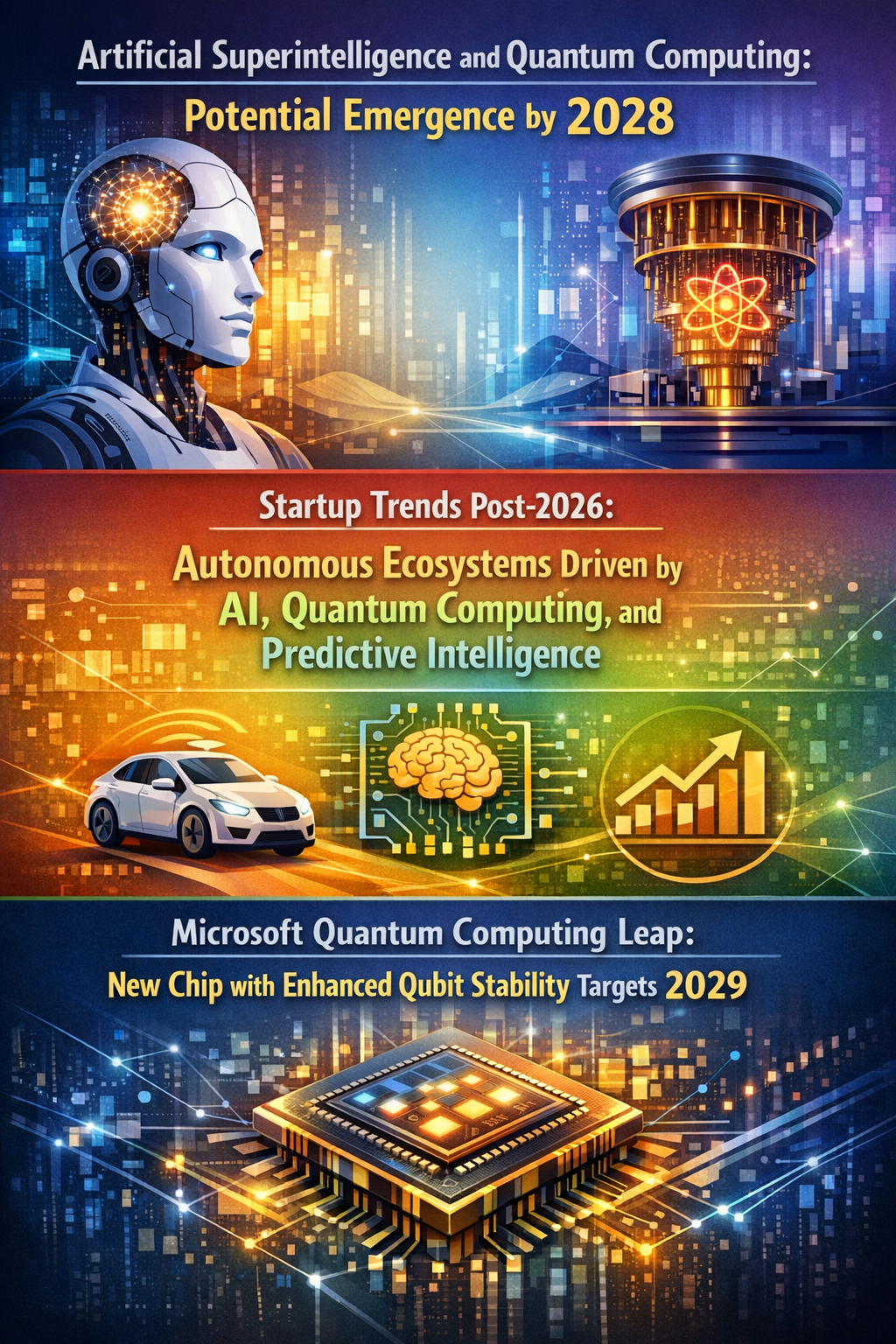
Intelligence Briefing about Quantum Computing
Emerging Trends Impacting Infosys
- Accelerated development of quantum-resistant blockchain platforms, with key players like TRON and Solana advancing post-quantum security solutions ahead of 2026–2030 (TechBullion, MEXC).
- Significant breakthroughs in cryogenic electronics that could mitigate quantum computing hardware challenges, enhancing scalability and applicability, including for deep space missions (ScienceDaily).
- The projected timeline for widespread quantum computing impact and post-quantum cryptographic standardization is between 2028 and 2035, as highlighted by NIST and industry experts (CryptoNews).
- Convergence of quantum computing with AI, advanced robotics, and IoT is driving the emergence of highly autonomous ecosystems expected to disrupt multiple industry verticals by 2026 and beyond (Differ.blog).
- Potential rapid emergence of artificial superintelligence in tandem with quantum computing could shift competitive landscapes and operational paradigms as early as 2028 (LinkedIn).
Key Challenges, Opportunities, and Risks
- Challenges: Adapting legacy IT infrastructure to quantum-resistant protocols; protecting client data amid impending cryptographic threats; bridging hardware limitations in quantum computing deployment.
- Opportunities: Early leadership in quantum-safe solutions and consulting; partnerships with emerging blockchain and IoT innovators leveraging quantum tech; developing proprietary quantum algorithms for enterprise clients.
- Risks: Potential obsolescence of current cryptographic methods by 2030–2035; accelerated competitor advantage through early quantum adoption; regulatory and compliance uncertainties around quantum-safe standards.
Scenario Development
- Best-case scenario: Infosys capitalizes on early quantum resistance deployments; quantum hardware breakthroughs and AI integration enable novel quantum services; industry standards mature rapidly, positioning Infosys as a market leader.
- Intermediate positive scenario: Quantum threats evolve gradually; Infosys steadily adapts infrastructure with moderate investment; ecosystem development is collaborative but slower; key clients adopt quantum-safe solutions incrementally.
- Intermediate negative scenario: Quantum breakthroughs outpace Infosys’ adaptation; competitors capture market share with proprietary quantum-enabled offerings; legacy systems face increasing security vulnerabilities without sufficient mitigation.
- Worst-case scenario: Quantum computing becomes broadly operational by 2028 with minimal standards in place; critical cryptographic failures lead to data breaches; Infosys faces reputational and financial damage due to delayed response.
Strategic Questions
- How can Infosys accelerate integration of quantum-resistant cryptography into client solutions ahead of the predicted 2030–2035 timeline?
- What partnerships or investments could strategically position Infosys at the forefront of emerging quantum technologies and applications?
- How might Infosys balance resource allocation between traditional cybersecurity and quantum threat mitigation without compromising current services?
- In what ways can Infosys leverage quantum computing and AI convergence to create differentiated offerings for the IoT and autonomous systems markets?
- What frameworks could Infosys develop to anticipate and manage risks related to the rapid emergence of artificial superintelligence alongside quantum computing?
Actionable Insights for Strategic Decision-Making
- Infosys could begin piloting quantum-resistant blockchain solutions by collaborating with leading projects such as TRON and Solana to validate use cases and service models.
- Investing in R&D focused on cryogenic electronics and quantum hardware advances could future-proof Infosys’ technology stack and build proprietary competencies.
- Developing an internal task force to monitor regulatory developments on post-quantum cryptographic standards could ensure early compliance and advisory capabilities.
- Infosys could explore creating interdisciplinary teams that integrate AI, quantum computing, and IoT expertise to innovate scalable autonomous ecosystem solutions.
- Scenario planning exercises based on the outlined futures could enhance organizational agility and inform contingency strategies against quantum-related disruptions.
Briefing Created: 19/06/2026