Our Scans
·
Blockchain
·
Intelligence Briefing
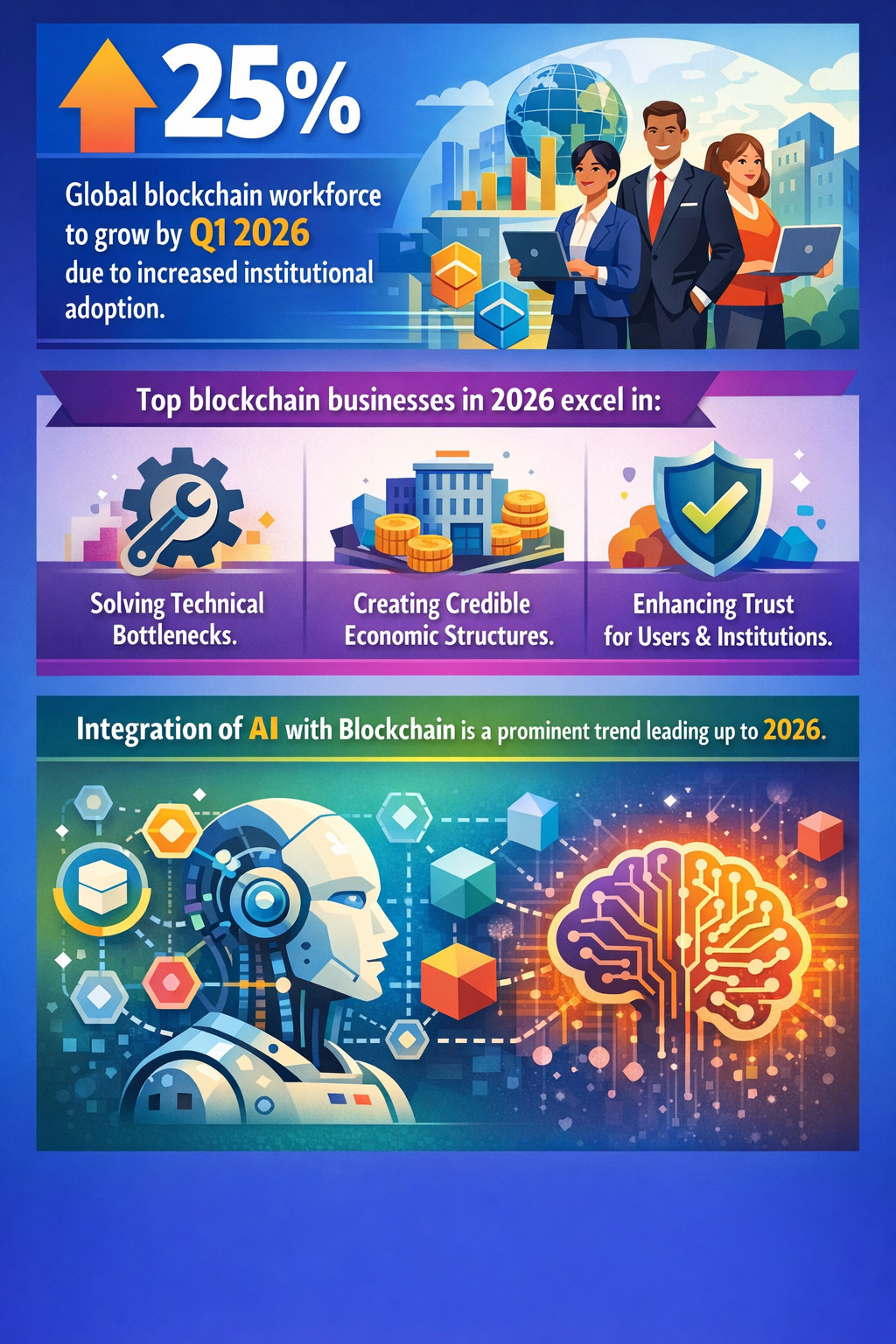
Intelligence Briefing about Blockchain
Critical Emerging Trends
- Rapid growth of private blockchains with an expected CAGR of 41.1% from 2026 to 2034, reflecting increased enterprise adoption in secure, permissioned environments (Precedence Research).
- Integration of AI with blockchain technology driving innovation in smart contract automation, data processing, and ecosystem utility (Bitcoin Foundation).
- The emergence of stablecoins, tokenized deposits, and other on-chain money instruments poised to catalyze a multi-trillion-dollar shift in financial infrastructure (Antier).
- Development of AI-focused high-performance blockchains potentially elevating ecosystem leadership and token value (CoinMarketCap).
- Expansion of the global blockchain workforce by 25% by Q1 2026, driven by accelerated institutional adoption (Axiom Recruit).
- SWIFT’s blockchain initiatives supporting cross-border payments and increasing capital flow through stablecoins and digital cash instruments (Fintech Weekly).
- Blockchain’s growing role in governmental transparency and administrative cost reduction, enhancing service delivery (Digital Chamber).
Key Challenges, Opportunities, and Risks
- Challenges: Navigating regulatory uncertainty surrounding stablecoins and digital asset infrastructure; managing security risks inherent in blockchain integration; ensuring workforce skills match rapid technological evolution.
- Opportunities: Leveraging AI-blockchain convergence to create differentiated solutions; capitalizing on SWIFT’s blockchain infrastructure for enhanced financial services; expanding private blockchain deployments in enterprise sectors such as energy and finance.
- Risks: Volatility in crypto markets impacting token-based business models; potential fragmentation of blockchain standards hindering interoperability; reputational risks if security or compliance failures occur.
Scenario Development
- Best-Case: Broad institutional adoption of AI-integrated private blockchains, widespread regulatory clarity, and seamless integration with financial infrastructures like SWIFT, triggering exponential growth and market leadership for Infosys in blockchain solutions.
- Optimistic: Stable progress in private blockchain adoption with pockets of regulatory challenges, steady workforce growth, and moderate success in AI-blockchain product launches, resulting in sustainable but incremental market gains.
- Challenging: Regulatory fragmentation slows stablecoin and cross-border blockchain payments, workforce talent shortages emerge, and competitive pressures from fragmented blockchain ecosystems limit Infosys’s market penetration.
- Worst-Case: Regulatory clampdowns, high-profile security breaches, and blockchain market volatility undermine investor confidence, causing stalled project deployments, talent attrition, and loss of competitive advantage.
Strategic Questions
- How can Infosys position itself to lead in the convergence of AI and blockchain across diverse industries?
- What strategies could Infosys employ to navigate and influence evolving regulatory frameworks relating to stablecoins and digital financial instruments?
- In what ways might Infosys build and retain a blockchain-ready workforce to sustain growth amidst rapid technological changes?
- How could Infosys leverage emerging public-private blockchain partnerships, such as those involving SWIFT, to expand global financial infrastructure services?
- What risk mitigation frameworks could Infosys develop to safeguard against security and reputational risks in blockchain implementations?
Actionable Insights & Considerations
- Infosys could invest in developing proprietary AI-powered blockchain platforms or partnerships that offer differentiated value propositions.
- Proactive engagement with regulators and industry consortia could help Infosys shape favorable regulatory environments and standards.
- Building training programs and talent pipelines focused on blockchain and AI integrations could secure future workforce capabilities.
- Infosys could explore pilot projects in collaboration with financial institutions leveraging SWIFT’s blockchain infrastructure to gain early market presence.
- Instituting comprehensive security audits and compliance protocols could reduce operational risks and build client trust.
Briefing Created: 24/06/2026