Our Scans
·
Generative AI
·
Intelligence Briefing
Intelligence Briefing about Generative AI
Critical Trends Impacting Infosys
- Generative AI is poised to create substantial economic impact, potentially adding up to $4.4 trillion annually through diverse corporate applications (ResumeHog).
- By 2026, over 80% of enterprises are expected to adopt generative AI APIs or deploy AI-enabled applications in production, signaling widespread integration (Gitnexa).
- Large language model (LLM)-powered chatbots will dominate, accounting for approximately 82.7% of global chatbot usage, demonstrating accelerating enterprise and consumer adoption (USM Systems).
- Generative AI is forecasted to boost global GDP by $7 trillion and increase productivity growth by 1.5 percentage points over the next decade (AWS).
- AI risk control is becoming increasingly critical as organizations expand generative AI usage, raising concerns over trust, security, and compliance (Global Market Research).
Key Challenges, Opportunities, and Risks
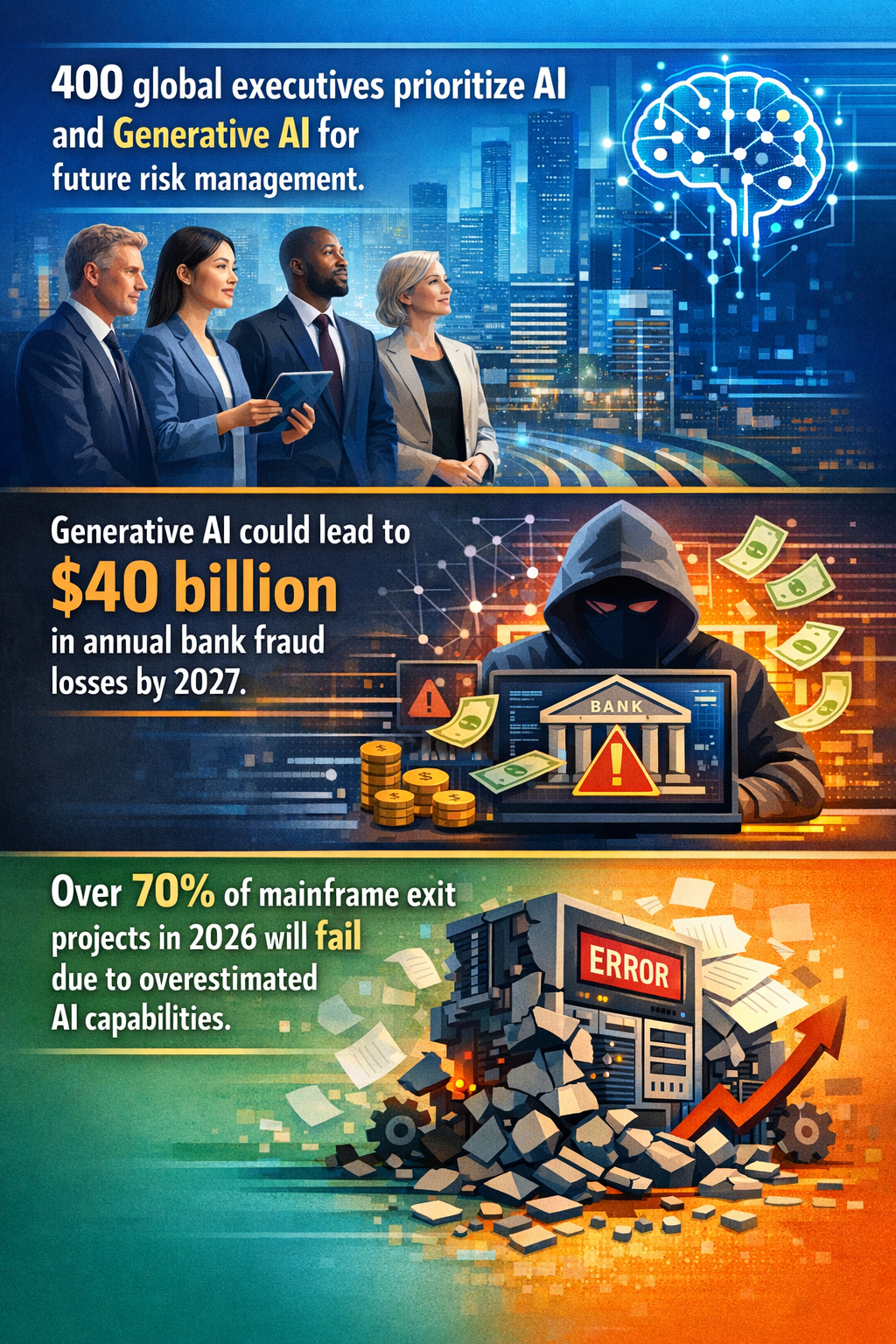
- Challenge: Overestimation of generative AI tooling capabilities leading to failed projects, notably in mainframe exit initiatives where 70% are forecasted to miss goals (The Register).
- Risk: Escalation of AI-driven cybercrime, with potential bank fraud losses tripling to $40 billion by 2027 (Ohio CPA).
- Opportunity: Upskilling workforce learning to effectively leverage generative AI offers competitive advantage; failure to adapt may pose larger threat than AI itself (Science Daily).
- Opportunity & Risk: Leadership in AI-driven automation and risk management is a strategic priority for executives globally, with AI integration offering operational gains but necessitating careful governance (CorpHedge).
Scenario Development
- Best-Case: Rapid and effective enterprise-wide generative AI adoption boosts productivity and market share, complemented by robust risk management frameworks mitigating fraud and operational failures.
- Optimistic Moderate: High AI adoption yields significant gains, though uneven workforce upskilling causes pockets of inefficiency; regulatory frameworks evolve to balance innovation with security.
- Challenging: Overhyped AI capabilities cause high-profile project failures; rising AI-powered fraud undermines trust, slowing adoption; skill gaps hinder competitive positioning.
- Worst-Case: Widespread misuse and security breaches from generative AI escalate financial losses; organizations lag severely in adoption and workforce preparedness, resulting in loss of client confidence and revenue.
Strategic Questions for Consideration
- How could Infosys best balance aggressive generative AI integration with the need for stringent risk and security controls?
- What strategies could be employed to accelerate workforce upskilling and prevent skill gaps from limiting AI potential?
- How might emerging fraud and misuse risks tied to generative AI impact client trust and regulatory compliance?
- What investments could be prioritized to ensure realistic expectations and success in AI-driven transformation projects?
Actionable Insights and Considerations
- Infosys could establish collaborative upskilling programs aimed at enhancing employee proficiency in AI tools to maximize value capture and reduce resistance.
- Developing comprehensive AI risk management frameworks could help anticipate and mitigate fraud, security, and compliance challenges.
- Piloting generative AI applications with clearly defined KPIs may help prevent overestimation of capabilities and avoid costly failures in transformation initiatives.
- Engaging with clients proactively on AI ethics and governance could position Infosys as a trusted partner in responsible AI adoption.
Briefing Created: 24/06/2026