Our Scans
·
AI
·
Intelligence Briefing
Intelligence Briefing about AI
Critical Emerging Trends
- Rapid adoption of task-specific AI agents, with Gartner projecting 40% enterprise application embedding by 2026, rising to 80% of project management tasks fully AI-driven by 2030 (Tommaso Maria Ricci).
- Machine learning is becoming central to next-gen cybersecurity architectures, marking a shift in defense strategies from 2026 onwards (NovusTech World).
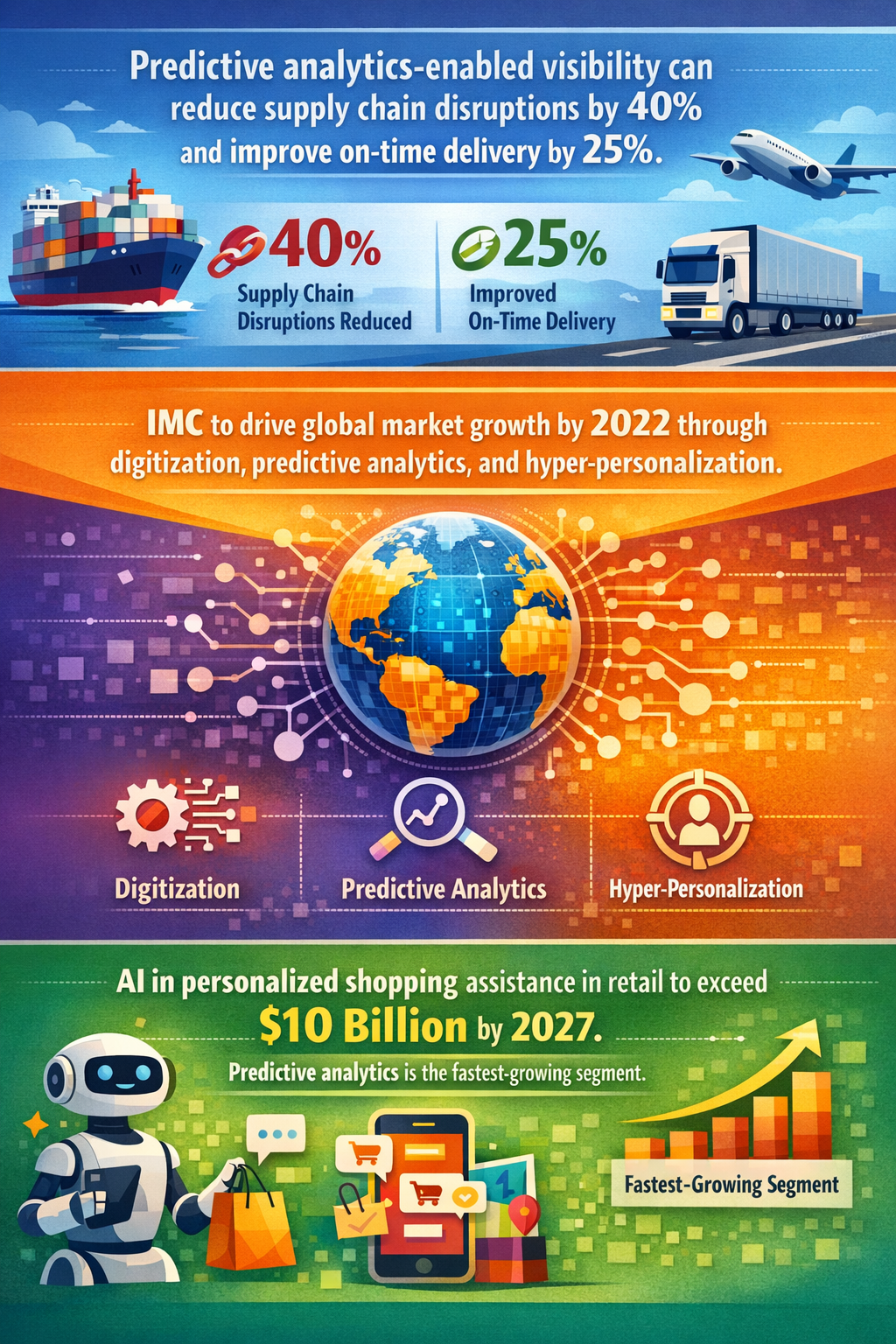
- Predictive analytics is transforming supply chains by reducing disruptions up to 40% and boosting on-time delivery by 25% (CPSCP).
- Machine learning is expected to dominate the AI software market with a ~37.4% share in 2026, solidifying its role at the core of enterprise systems (Persistence Market Research).
- Integration of autonomous equipment, predictive analytics, and centralized operational intelligence is becoming a foundational business requirement by 2030 (BriefGlance).
- Rising energy demands from AI and ML workloads could push U.S. data center electricity consumption from 4% in 2023 to between 6.7% and 12% by 2028, potentially impacting operational costs and sustainability goals (Davis Graham).
- Governments may need to reform immigration policies to attract AI and tech talent, enhancing innovation ecosystems and competitiveness (RBC Thought Leadership).
Key Challenges, Opportunities & Risks
- Challenge: Managing the energy footprint and sustainability impacts of expanding AI workloads.
- Opportunity: Leveraging AI-driven project management and predictive analytics to streamline delivery, reduce risks and improve client outcomes.
- Risk: Potential skills shortages if talent acquisition strategies do not evolve to meet demand in AI, ML, and materials science.
- Challenge: Integrating AI automation without compromising cybersecurity posture amid evolving threat landscapes.
- Opportunity: Establishing Infosys as a leader in AI-powered enterprise transformation through expertise in autonomous systems and operational intelligence.
Scenario Development
- Best-case: Widespread AI adoption across enterprise applications enables Infosys to lead digital transformation initiatives; talent pipelines expand via targeted policies; energy challenges mitigated by green computing innovations.
- Optimistic: AI integration accelerates but faces intermittent talent shortages; energy costs rise moderately impacting margins; cybersecurity enhancements keep pace with threats, preserving client trust.
- Pessimistic: Talent scarcity and rising energy costs slow AI deployment; growing cybersecurity incidents undermine client confidence; regulatory constraints on data center operations increase compliance burden.
- Worst-case: Failure to scale AI capabilities due to resource constraints and skill gaps; critical cyber breaches cause reputational damage; unsustainable energy usage triggers regulatory penalties and operational disruptions.
Strategic Questions
- How can Infosys proactively manage the energy and environmental impacts of expanding AI workloads within client and internal operations?
- What talent acquisition and retention strategies could be most effective in building a sustainable AI and ML expertise ecosystem?
- In what ways can Infosys leverage AI-driven automation to enhance cybersecurity posture for itself and its clients?
- How should Infosys prioritize investments between AI-enabled project management, predictive analytics, and autonomous systems to maximize competitive advantage?
Actionable Insights & Considerations
- Infosys could explore partnerships with educational institutions and governments to influence immigration reforms that enhance talent inflow.
- Investment in energy-efficient AI infrastructure and green data center technologies could reduce operational risks related to rising power consumption.
- Developing advanced AI cybersecurity tools could position Infosys as a trusted partner in a market seeking next-gen defenses.
- Incremental rollout of AI-powered project management and predictive analytics solutions could demonstrate immediate value while managing adoption risks.
Briefing Created: 24/06/2026