Our Scans
·
Artificial Intelligence (AI)
·
Intelligence Briefing
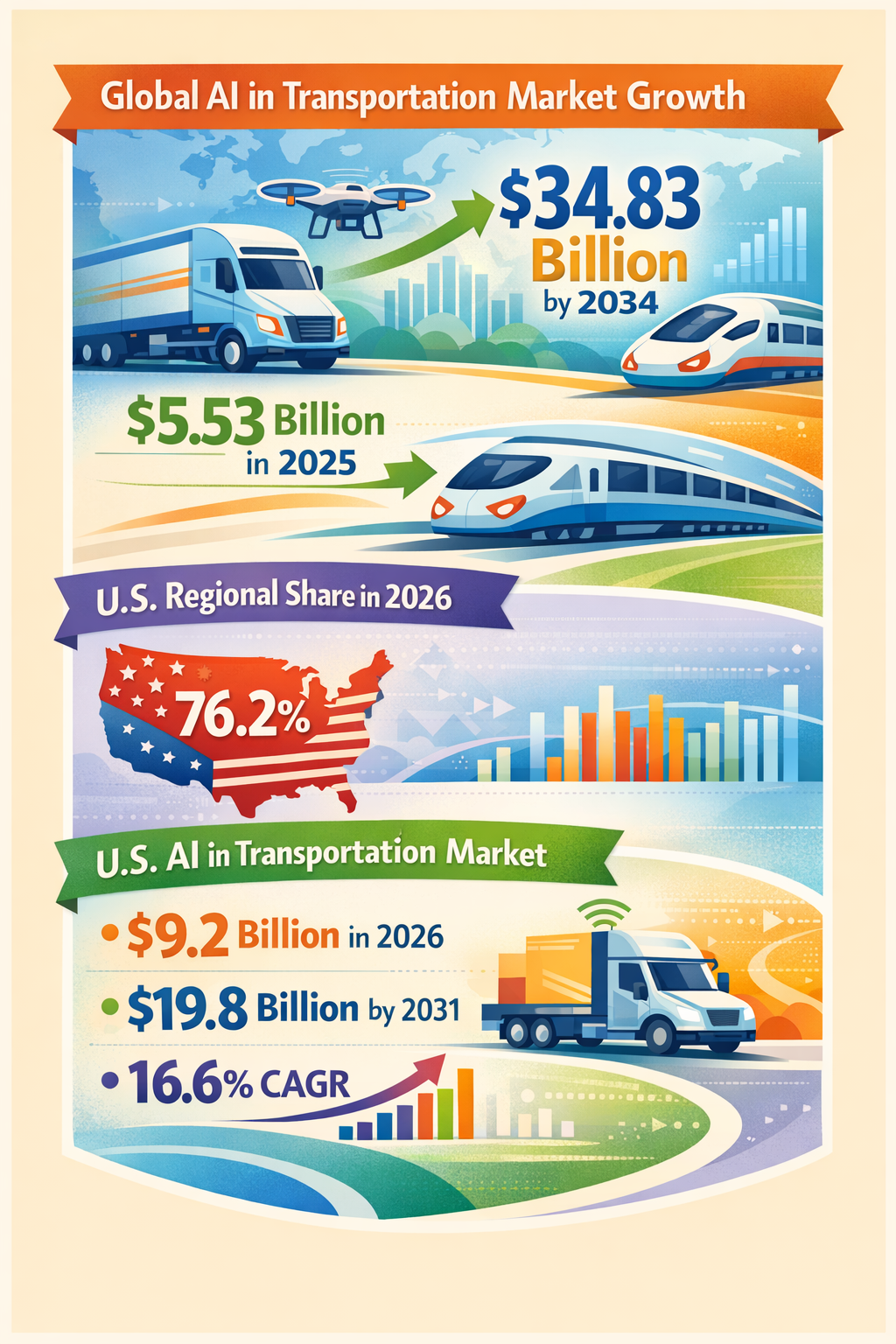
Intelligence Briefing about Artificial Intelligence (AI)
Emerging Trends
- Widespread adoption of AI-enabled and connected traffic management systems is transforming infrastructure, particularly in the U.S., expected to hold a dominant regional market share by 2026 (Persistence Market Research).
- Intelligent driverless freight coordination is poised for strong growth in North America due to logistics modernization, autonomous vehicle development, and supply-chain digitization (HTF Market Intelligence).
- Rapid urbanization in the Asia Pacific accelerates AI-driven smart city initiatives, expanding AI applications in transportation, energy management, and public safety (Market Data Forecast).
- AI-native communication infrastructure is advancing rapidly with expected growth rates exceeding 50% CAGR from 2026 to 2034, supporting enhanced radio, broadband, fixed, edge, and transport layers (The Insight Partners).
Key Challenges, Opportunities, and Risks
- Challenges: Pressure on Canada's digital infrastructure modernization and workforce skill development; exposure to increasing AI-powered cyberattacks impacting critical transportation infrastructure (Transport Canada Annual Report 2025, Bellrock Advisory).
- Opportunities: Adoption of intelligent freight coordination and smart city solutions could enhance efficiency, safety, and sustainability in Canada's transport systems.
- Risks: Regulatory, operational, and execution uncertainties surrounding AI deployment in mobility and robotics, exemplified by challenges faced by leading industry players (Investing.com).
- Integration Focus: Technology integration must prioritize human-centric outcomes rather than AI as a standalone topic, aligning with global innovation discourse (ITS International).
Scenario Development
- Best-Case: Rapid AI adoption coupled with robust infrastructure upgrades leads to a resilient, highly efficient Canadian transport ecosystem integrated seamlessly with North American smart freight networks.
- Optimistic: Moderate AI implementation with incremental workforce development and cybersecurity improvements enhances operational productivity but lags behind global leaders.
- Challenging: Slow AI uptake due to infrastructure and skill gaps results in Canada's declining competitiveness in logistics and increased vulnerability to cyber threats.
- Worst-Case: Widespread AI-driven cyberattacks and regulatory failures disrupt critical transport infrastructure, causing systemic inefficiencies and safety incidents, while adoption stagnates.
Strategic Questions
- How can Transport Canada balance rapid AI adoption with the urgent need to strengthen cybersecurity and digital infrastructure resilience?
- What strategies could be employed to accelerate workforce development and skills modernization in anticipation of AI-driven transportation transformations?
- In what ways can Canada's transportation policy align with broader smart city and North American supply chain modernization trends to remain competitive?
- How might Transport Canada foster public trust in AI-enabled mobility solutions amid regulatory and operational uncertainties?
Potential Actionable Insights
- Investing in scalable AI-native communication infrastructure could enable future-proof digital ecosystems supporting transport innovation.
- Collaborative partnerships with industry and international peers could accelerate knowledge sharing and best practices for AI governance and deployment.
- Proactive development of AI-specific cybersecurity frameworks could mitigate risks of emerging AI-powered cybercrime targeting transport networks.
- Emphasizing human-centered AI integration may enhance public acceptance and align technological progress with societal values.
Briefing Created: 24/08/2026