Our Scans
·
AI Supremacy
·
Intelligence Briefing
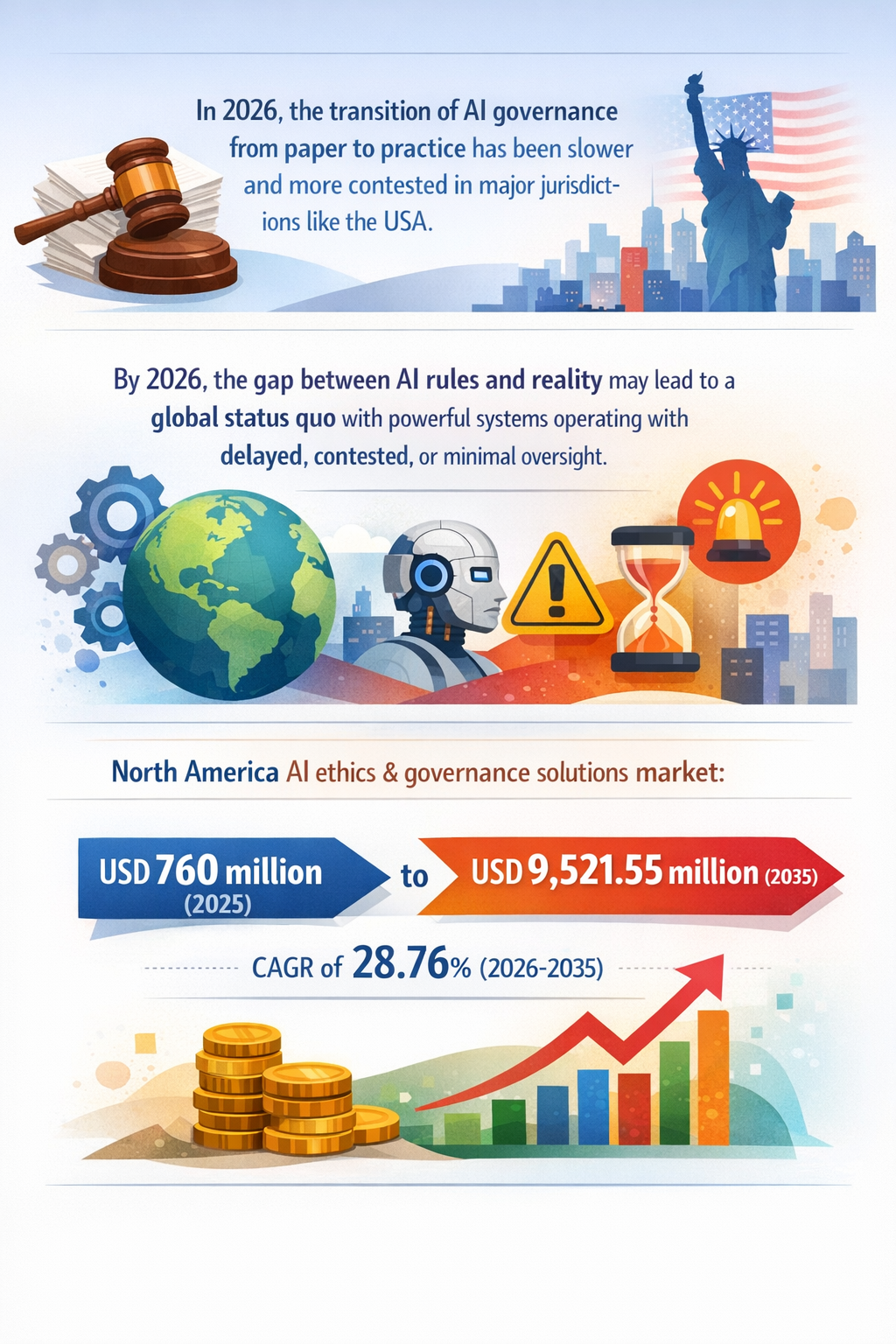
Intelligence Briefing about AI Supremacy
Emerging Trends
- Increasingly sophisticated AI governance frameworks at state and regional levels, exemplified by New York, Texas, and California, focusing on sectors such as healthcare and emphasizing patient safety and accountability (Real Economy, JD Supra).
- Growing recognition of the need for tailored AI regulations that balance risk mitigation with innovation support, yet these frameworks remain fragmented and regionalized (JD Supra).
- Persistent divergence between AI regulatory intentions and the operational realities of AI deployment, leading to delayed, minimal, or contested oversight on powerful AI systems globally (Diplomacy.edu).
Key Challenges, Opportunities, and Risks
- Challenges: Navigating regulatory fragmentation across jurisdictions; ensuring AI deployment aligns with evolving legal and ethical standards; maintaining competitive advantage amid uneven global AI oversight.
- Opportunities: Leveraging compliance expertise to influence regulatory shaping; innovating in trustworthy AI products aligned with emerging standards; participating in cross-border AI governance dialogues to pre-empt risks.
- Risks: Exposure to regulatory penalties or operational restrictions in heavily regulated markets; reputational damage from AI-related safety or transparency failures; strategic disadvantage if competitors exploit regulatory gaps more effectively.
Scenario Development
- Best-Case: Harmonized global AI governance frameworks emerge, balancing innovation and risk controls, enabling Temasek to scale trustworthy AI applications confidently across markets.
- Moderate Progress: Regional AI regulations evolve disparately but steadily, requiring adaptive compliance strategies; Temasek leverages its agility to operate successfully while influencing standards.
- Fragmented Status Quo: Regulatory gaps and inconsistencies persist; powerful AI systems operate with minimal oversight, exposing Temasek to unforeseen legal and ethical challenges amid competitive pressure.
- Worst-Case: AI governance fails to keep pace with technological advances, resulting in significant systemic risks, regulatory crackdowns, and a loss of market trust affecting AI-focused investments.
Strategic Questions
- How can Temasek proactively engage with evolving AI regulatory frameworks to shape and anticipate governance trends?
- What strategies could support scaling AI investments while managing cross-jurisdictional compliance risks effectively?
- In what ways might transparent and responsible AI deployment serve as a competitive differentiator for Temasek’s portfolio companies?
- How should Temasek prepare for scenarios of regulatory fragmentation or systemic AI governance failures?
- What role could Temasek play in fostering international collaboration on AI standards and ethical frameworks?
Actionable Insights for Strategic Decision-Making
- Temasek could prioritize investments in AI technologies and companies demonstrating strong governance and compliance capabilities to mitigate regulatory risk.
- Temasek could develop internal expertise or partnerships focused on AI policy monitoring to anticipate and adapt rapidly to changing regulatory landscapes.
- Engaging in multi-stakeholder AI governance forums could help Temasek influence emerging standards and network with regulators and industry peers.
- Scenario planning exercises could be regularly conducted to stress-test strategies against diverse AI governance outcomes.
- Temasek could incorporate transparency and ethical AI principles into its investment criteria to build long-term value and stakeholder trust.
Briefing Created: 12/06/2026