Our Scans
·
Energy Transition
·
Intelligence Briefing
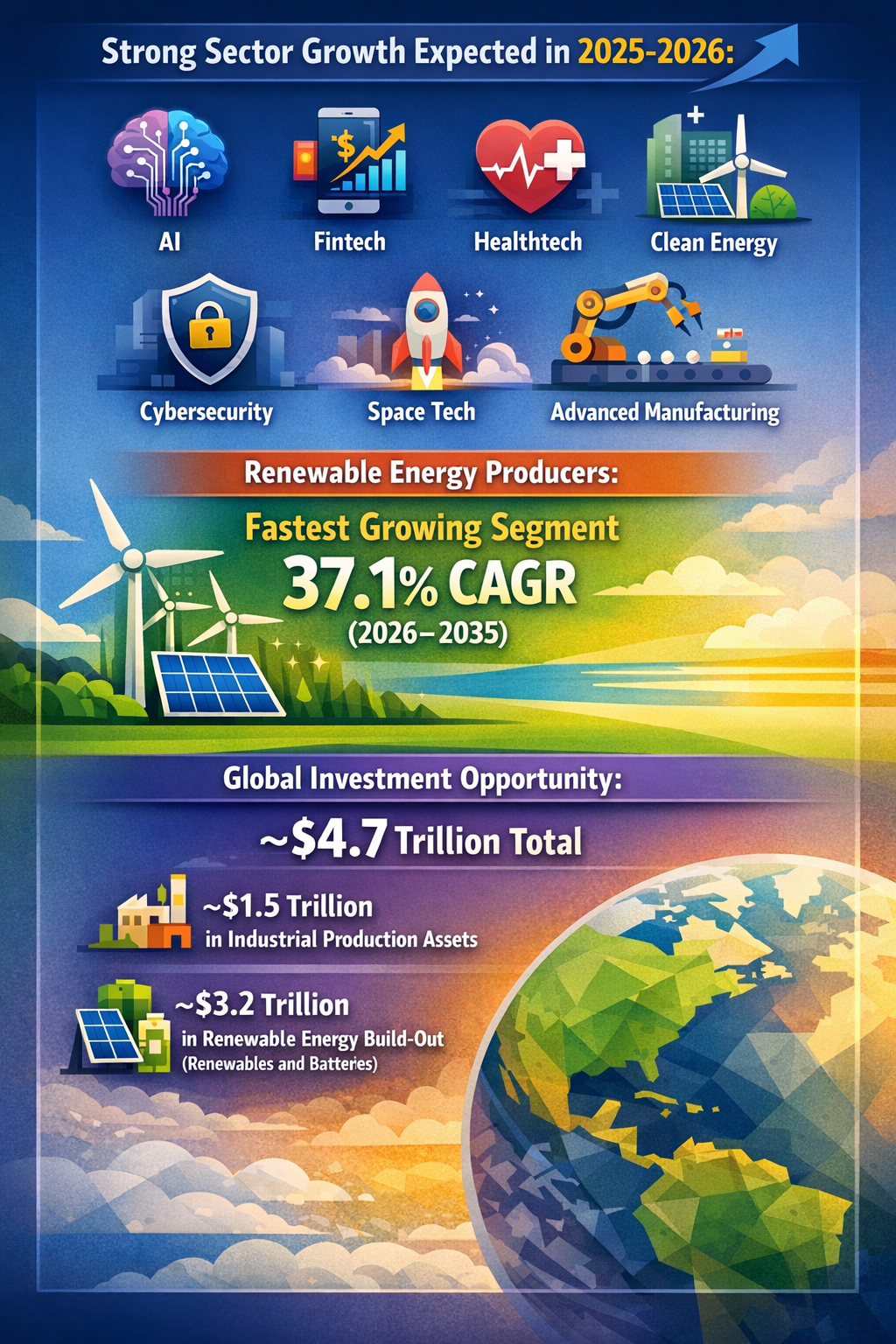
Intelligence Briefing about Energy Transition
Critical Trends Impacting Belastingdienst
- Rapid growth in global renewable energy employment, projected to more than triple by 2050, indicating large-scale labor market shifts (Positive News).
- Massive investment flows into clean energy technologies, surpassing fossil fuel spending nearly two-to-one, focusing on renewables, storage, grids, electrification, and nuclear (Forbes).
- Increasing deployment of advanced clean energy technologies, including AI-driven energy infrastructure and fusion energy developments (e.g., China's artificial sun reactors) (CSIS, BGR).
- Government commitments to sustained energy transition efforts, such as South Korea’s long-term approach beyond crisis management (Bloomberg).
- Emergence of broad clean energy value chains presenting multi-trillion dollar investment opportunities globally, with a focus on industrial decarbonization and renewables build-out (Mission Possible Partnership).
Key Challenges, Opportunities, and Risks
- Challenges: Adapting fiscal policies and tax frameworks to rapidly changing employment sectors; managing tax compliance for emerging clean energy technologies and investments; ensuring equitable transition for affected labor groups.
- Opportunities: Leveraging increased clean energy investments to enhance tax revenue bases; promoting innovation-friendly fiscal incentives; supporting sustainable economic growth through green tax policies.
- Risks: Potential for regulatory gaps or delays causing missed revenue opportunities; exposure to volatility in nascent technology valuations; geopolitical risks impacting supply chains and investment flows.
Scenario Development
- Best-Case: Global alignment on energy transition accelerates investments in clean tech and AI-driven infrastructure, leading to robust employment growth, strong tax revenues, and stable regulatory frameworks supporting innovation.
- Moderate Growth: Continued but uneven global investments in renewable and advanced clean energy technologies; challenges in workforce adaptation persist; moderate tax base expansion with localized regulatory uncertainties.
- Slowed Transition: Geopolitical tensions and supply chain disruptions slow clean energy deployment; investments plateau; tax revenues from emerging sectors grow slowly, with increased compliance complexity.
- Worst-Case: Energy transition stalls due to crises or policy backtracking; technological innovations fail to scale timely; rising unemployment in traditional sectors without sufficient support; tax revenues decline or become more volatile.
Strategic Questions
- How can Belastingdienst adapt its fiscal and regulatory frameworks to effectively capture growing revenues from the evolving clean energy sector?
- What policies could better facilitate workforce transition and tax compliance amid rapid labor market shifts induced by the energy transition?
- How might emerging technologies like AI and fusion energy impact tax base composition and forecasting models?
- What measures could mitigate risks associated with geopolitical and technological uncertainties affecting clean energy investments?
Actionable Insights for Strategic Decision-Making
- Belastingdienst could proactively develop tax guidance and incentives targeting renewable energy investments and innovation clusters to attract sustainable business activities.
- It could enhance data analytics capabilities to monitor emerging sector dynamics and promptly adjust tax policies reflecting labor and industrial shifts.
- Collaboration with other governmental and international agencies could be prioritized to anticipate regulatory gaps and harmonize approaches to new energy technologies.
- Scenario planning integrating geopolitical and technological variables could be strengthened to improve resilience and responsiveness of fiscal strategies.
Briefing Created: 16/06/2026