Our Scans
·
Canadian Transportation Agency
·
Intelligence Briefing
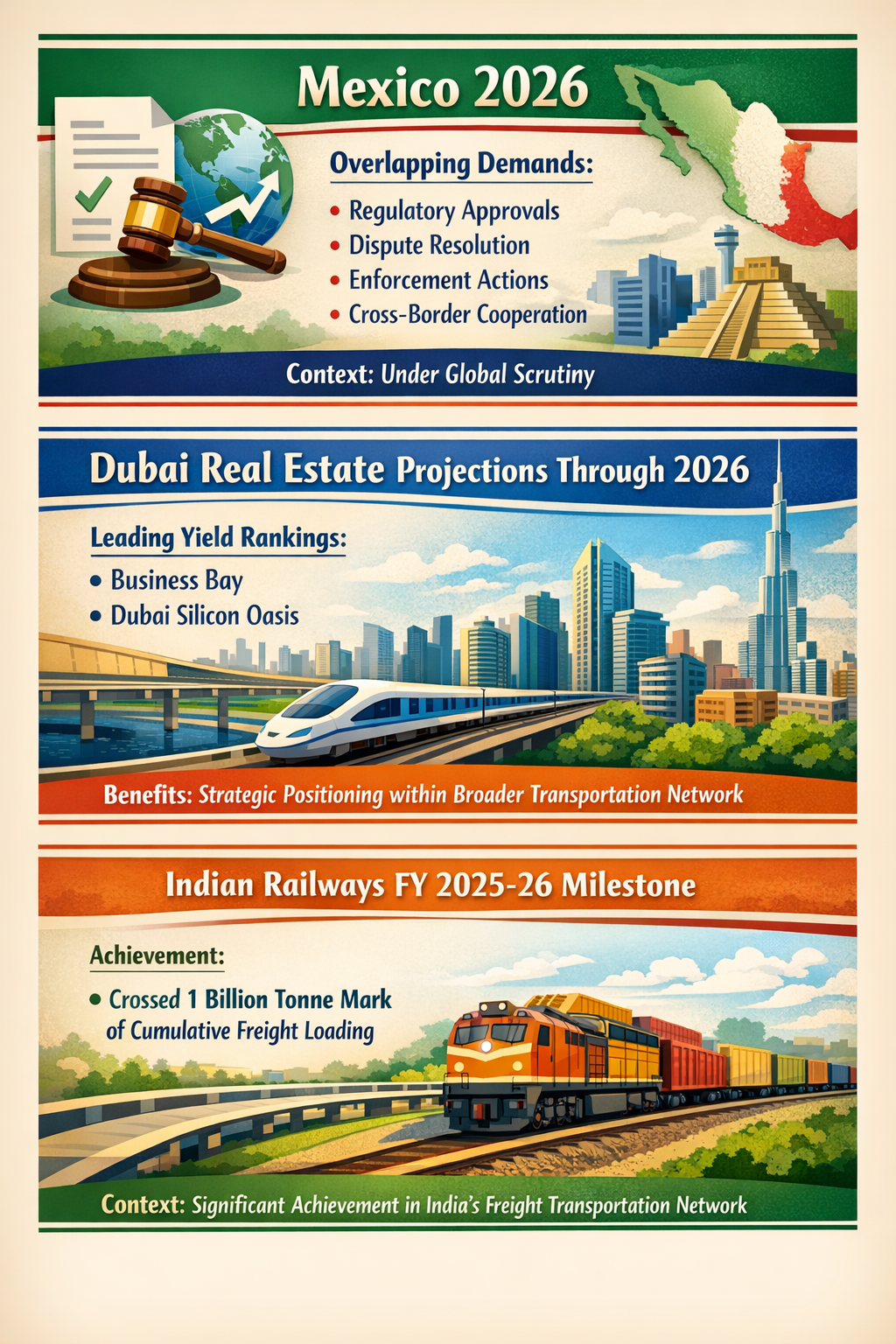
Intelligence Briefing about Canadian Transportation Agency
Emerging Trends
- Increasing global focus on reforming transportation regulations to enhance efficiency and public engagement (U.S. Department of Transportation).
- Growing prominence of mediation and alternative dispute resolution (ADR) mechanisms in transportation-related conflicts across different regions, signaling potential shifts in dispute management approaches (DWF Group).
- Enhanced emphasis on multi-jurisdictional cooperation and regulatory alignment amid cross-border projects and infrastructure developments, as observed in global markets (Mexico 2026 Infrastructure).
- Strategic positioning of transportation hubs significantly impacts regional economic growth, highlighting the critical role of integrated transport networks (Dubai Real Estate Trends).
Key Challenges, Opportunities, and Risks
- Challenges: Navigating the complexities of regulatory reform while balancing stakeholder interests; adapting to evolving ADR frameworks; managing cross-border regulatory inconsistencies.
- Opportunities: Leveraging mediation and ADR to reduce dispute resolution timelines; fostering international collaboration to harmonize regulatory practices; capitalizing on transportation network enhancements to spur economic development.
- Risks: Potential regulatory fragmentation due to uneven adoption of reforms; escalation of disputes without efficient resolution mechanisms; geopolitical uncertainties impacting international transportation cooperation.
Scenario Development
- Best-Case: Successful regulatory reform aligned with robust ADR adoption accelerates dispute resolution and enhances Canada’s competitiveness in global transport networks.
- Moderate-Positive: Incremental regulatory improvements and growing cooperation with international partners improve operational efficiency but face occasional jurisdictional conflicts.
- Moderate-Negative: Partial regulatory reforms fail to keep pace with international trends; disputes increase and enforcement of resolutions face delays, impacting project timelines.
- Worst-Case: Regulatory stagnation combined with fragmented dispute resolution frameworks leads to escalating conflicts, diminished investor confidence, and weakened cross-border transport relationships.
Strategic Questions
- How can Transport Canada proactively incorporate ADR frameworks to enhance dispute resolution effectiveness and reduce costs?
- What strategies could be employed to harmonize Canadian transportation regulations with evolving international standards?
- In what ways might Transport Canada leverage transportation hubs to maximize economic benefits domestically and across North America?
- How should Transport Canada prepare for and mitigate risks associated with geopolitical and regulatory uncertainties in cross-border transportation?
Actionable Insights
- Transport Canada could invest in pilot projects integrating mediation and arbitration into transportation dispute resolution to evaluate efficiency gains.
- Developing collaborative frameworks with international agencies might optimize regulatory harmonization and enforcement consistency.
- Enhancing data analytics on transportation hubs and network flows could inform targeted infrastructure investments to support economic growth.
- Scenario planning exercises involving key stakeholders could be utilized to anticipate and prepare for geopolitical and regulatory risks.
Briefing Created: 03/06/2026