Our Scans
·
Transportation supply chains
·
Intelligence Briefing
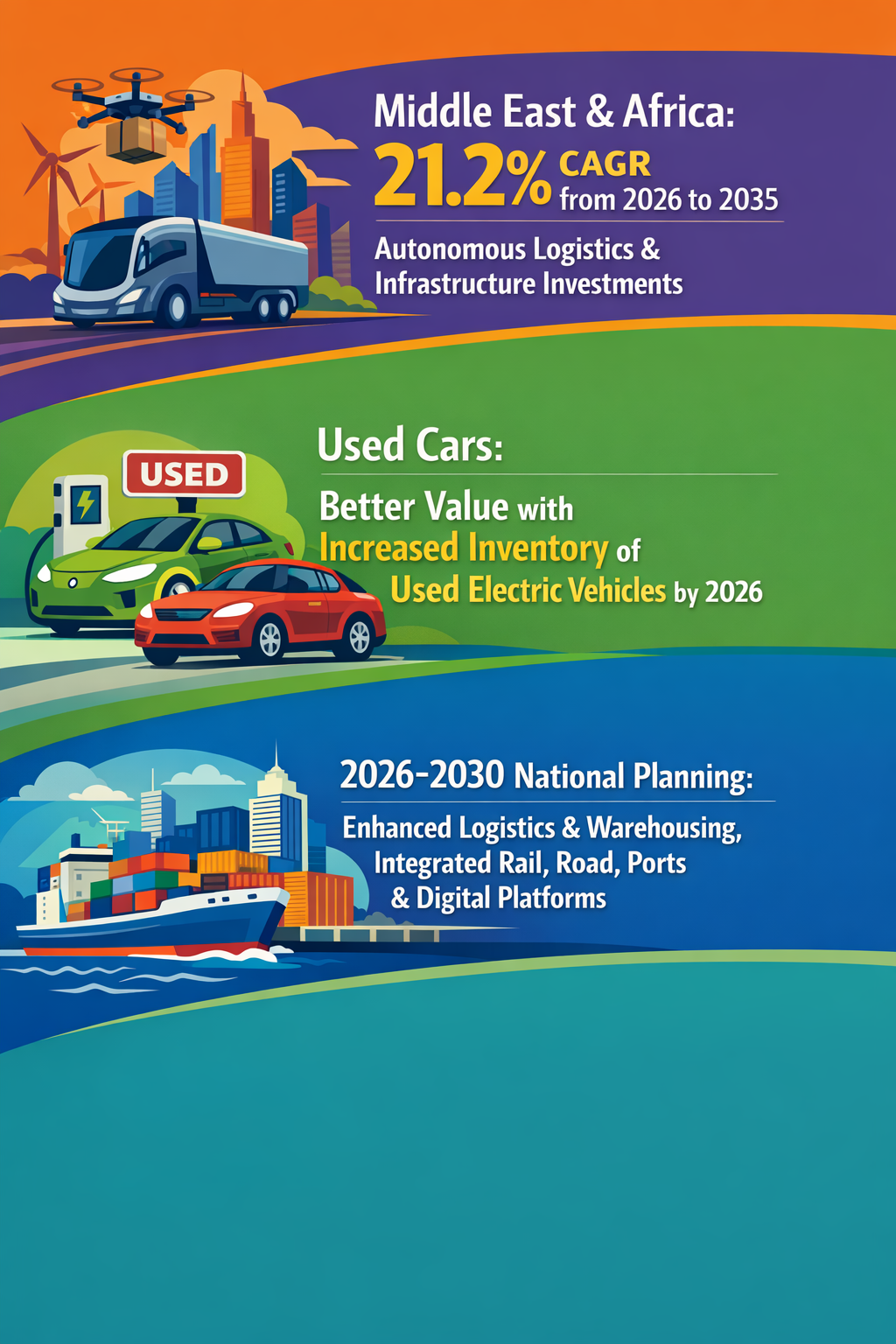
Intelligence Briefing about Transportation Supply Chains
Critical Trends Impacting Transport Canada
- Electrification and Charging Infrastructure Expansion: Significant investments in electric vehicle (EV) charging infrastructure, such as the UAE's plan to develop 70,000 charging points by 2030, indicate a global shift toward sustainable mobility solutions (Trade.gov).
- Logistics and Supply Chain Corridor Development: Emerging trade corridors like the India-Europe route that offer substantial reductions in transit times (up to 40%) and logistics costs (around 30%) highlight opportunities for more efficient international freight movement (Technocracy News).
- Infrastructure and Security Risks to Energy Supplies: Stability concerns in hydrocarbon supply chains due to infrastructure degradation, geopolitical tensions, and security threats in transit countries could impact fuel availability and prices (CES Intelligence).
- Integrated Multimodal Logistics Development: National planning efforts, such as in China, emphasize enhancing logistics competitiveness through integrated rail, road, port, and digital platform connectivity (Ken Research).
- Growth in Autonomous and Drone Logistics: The Middle East and Africa are rapidly advancing autonomous logistics and drone delivery markets to counter congestion and infrastructural gaps, with projected compound annual growth rates exceeding 20% between 2026 and 2035 (Precedence Research).
- Used Electric Vehicle Market Expansion: Falling used vehicle prices and increased inventory of used EVs forecast shifts in consumer behavior and secondary markets by 2026 (Empower).
Key Challenges, Opportunities, and Risks
- Challenges: Ensuring energy supply security amid geopolitical risks; adapting infrastructure to support electrification and autonomous logistics; integrating multimodal transport with digital platforms efficiently.
- Opportunities: Leveraging emerging international corridors to reduce costs and transit times; supporting EV adoption with expanded charging infrastructure; capitalizing on autonomous logistics to alleviate congestion and improve reliability.
- Risks: Potential fuel supply disruptions from geopolitical crises or attacks; technology adoption lag causing competitive disadvantage; insufficient investment in critical infrastructure leading to bottlenecks.
Scenario Development
- Best-Case: Rapid adoption of electrification and autonomous logistics paired with robust international trade corridors; diversified, secure energy supply; fully integrated multimodal transport networks reducing costs and emissions.
- Moderate Growth: Steady progress in EV infrastructure and autonomous technologies; gradual improvement in logistics corridors; manageable energy supply risks mitigated by diversified sourcing; moderate integration of digital platforms.
- Technology-Driven Disruption: Accelerated autonomous and digital logistics growth but faced with infrastructure challenges and persistent geopolitical risks; uneven adoption leading to regional disparities and supply chain fragmentation.
- Worst-Case: Severe geopolitical crises disrupt energy supply and trade corridors; infrastructure degradation and technological stagnation hinder logistics integration; rising congestion and costs with limited EV and autonomous vehicle penetration.
Strategic Questions
- How can Transport Canada proactively foster integration of emerging electric and autonomous vehicle technologies into existing transportation infrastructure?
- What strategies could mitigate energy supply risks stemming from geopolitical and security challenges in key transit regions?
- In what ways could international trade corridor developments impact Canadian logistics competitiveness, and how might Canada position itself advantageously?
- How prepared is Canada’s multimodal transport network to leverage advances in digital logistics platforms for enhanced supply chain efficiency?
- What policies could accelerate the growth of used electric vehicle markets while ensuring environmental and economic benefits?
Actionable Insights and Considerations
- Transport Canada could explore partnerships and regulatory frameworks supporting large-scale EV charging infrastructure expansion to encourage adoption nationwide.
- Investments could be considered to enhance resilience against fuel supply disruptions through diversification and alternative energy integration.
- Enhancing digital interoperability across rail, road, ports, and warehousing could streamline supply chains and improve responsiveness to market shifts.
- Monitoring international corridor developments may enable strategic positioning to leverage shortened transit times and reduced logistics costs.
- Preparing policies that support the burgeoning used EV market might encourage sustainable mobility and reduce barriers to EV diffusion.
Briefing Created: 30/08/2026