Our Scans
·
Alternative maritime routes for freight
·
Intelligence Briefing
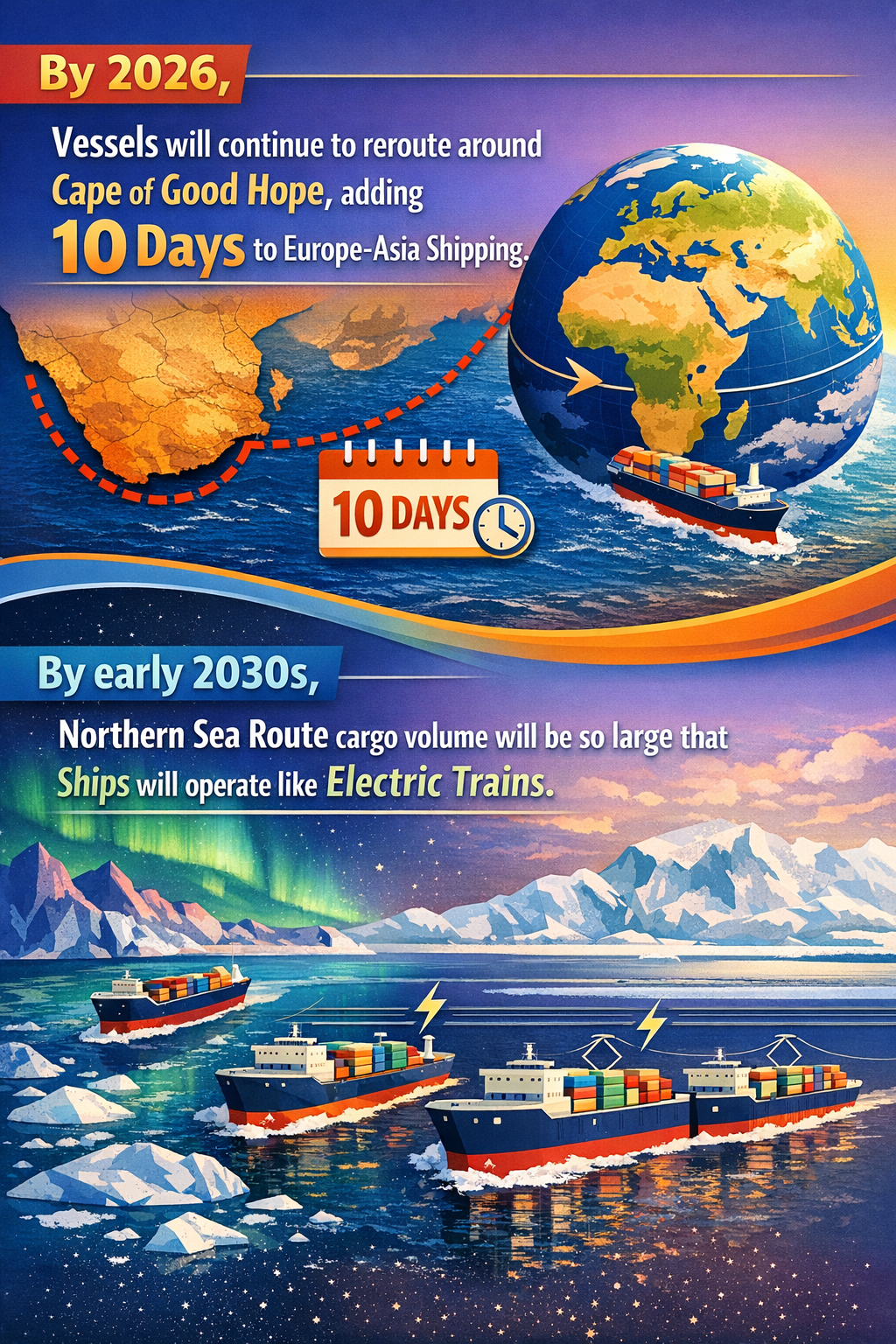
Intelligence Briefing about Alternative Maritime Routes for Freight
Critical Trends Impacting Transport Canada
- Increased interest in developing the Northern Sea Route (NSR) as a faster shipping corridor between Asia and Europe, contingent on Russian cooperation and broader geopolitical dynamics (Brookings).
- Shipping lines are rerouting the majority of Asia-Europe freight away from the Suez Canal and Red Sea due to current disruptions, favoring longer voyages around the Cape of Good Hope, which increases transit times by up to 40% (SeaRates).
- These extended routes create operational and logistical challenges for global shipping, notably increased voyage duration and supply chain fragility (Equity Edge Research).
Key Challenges, Opportunities, and Risks
- Challenges: Dependency on geopolitically sensitive regions, such as Russia's cooperation for NSR access, and vulnerabilities from alternative longer routes impacting shipping reliability.
- Opportunities: Leveraging the NSR could reduce transit times and costs significantly, presenting a strategic advantage for Canadian maritime freight and global trade connectivity.
- Risks: Increasing route distances around the Cape of Good Hope elevate fuel consumption and emissions, impacting sustainability goals. Potential geopolitical shifts could close or restrict alternative corridors, disrupting global supply chains.
Scenario Development
- Best-Case: Russia cooperates fully; NSR becomes a reliable, high-capacity corridor reducing Asia-Europe transit time by up to 30%, enhancing Canadian maritime trade opportunities.
- Moderate Case: NSR development proceeds unevenly with seasonal limitations; shipping lines use a mix of NSR and Cape routes, balancing costs and transit times but maintaining some supply chain risks.
- Challenging Case: Geopolitical tensions restrict NSR access; prolonged reliance on the Cape of Good Hope route sustains high costs, delays, and increased logistical complexity impacting freight competitiveness.
- Worst-Case: Further regional conflicts or blockades in the Red Sea or Cape routes severely disrupt global shipping; limited alternatives increase freight costs and severely strain supply chains, adversely impacting Canadian trade.
Strategic Questions
- How can Transport Canada proactively engage with Arctic stakeholders and international partners to influence Northern Sea Route development and governance?
- What contingency frameworks could be developed to mitigate supply chain risks associated with longer alternative maritime routes?
- How might environmental and sustainability commitments be reconciled with increased emissions from extended shipping routes?
- What policy levers could enhance Canada’s resilience against geopolitical disruptions impacting key maritime corridors?
Potential Actionable Insights
- Transport Canada could explore partnerships to support Arctic infrastructure and monitoring systems, positioning itself as a stakeholder in NSR governance and safety.
- Investments in supply chain flexibility and adaptive logistics could help manage uncertainties and delays from alternate longer routes.
- The agency could consider incentivizing greener shipping technologies to offset emissions from extended voyages around the Cape of Good Hope.
- Enhanced intelligence and scenario planning capabilities could enable timely responses to geopolitical developments impacting maritime freight routes.
Briefing Created: 15/05/2026