Welcome to Shaping Tomorrow

Our Scans · Voltaics · Roadmap


BLUF (Bottom Line Up Front)

The accelerating global energy transition driven by lithium innovation, advanced battery technologies, heightened industrial decarbonization, and emergent AI-powered infrastructure demands mandates a proactive, integrated transformation roadmap that leverages sustainable partnerships, technological adaptability, and regulatory alignment to secure Atradius's competitive positioning and resilience.

Key Drivers, Trends & Signals

  • Clean Energy & Industrial Transition: Robust investment in clean industry, led by China and emerging new industrial sunbelt economies, expanding value chains worth ~$4.7 trillion, powered by renewables and battery storage (Mission Possible Partnership).
  • Lithium Market Dynamics: Recovering lithium prices (~$18,000-$24,000/tonne), structural supply shortages from Chinese and African mine curtailments, and rising BESS demand underpin lithium’s resurgence and criticality (CleanTech Lithium).
  • Battery Technology Evolution: Shift from EV-focused nickel-rich chemistries to lithium iron phosphate (LFP) for cost-effective stationary storage; repurposed EV manufacturing lines signaling strategic reset in battery production (JE Dunn Construction, Ford LFP Production).
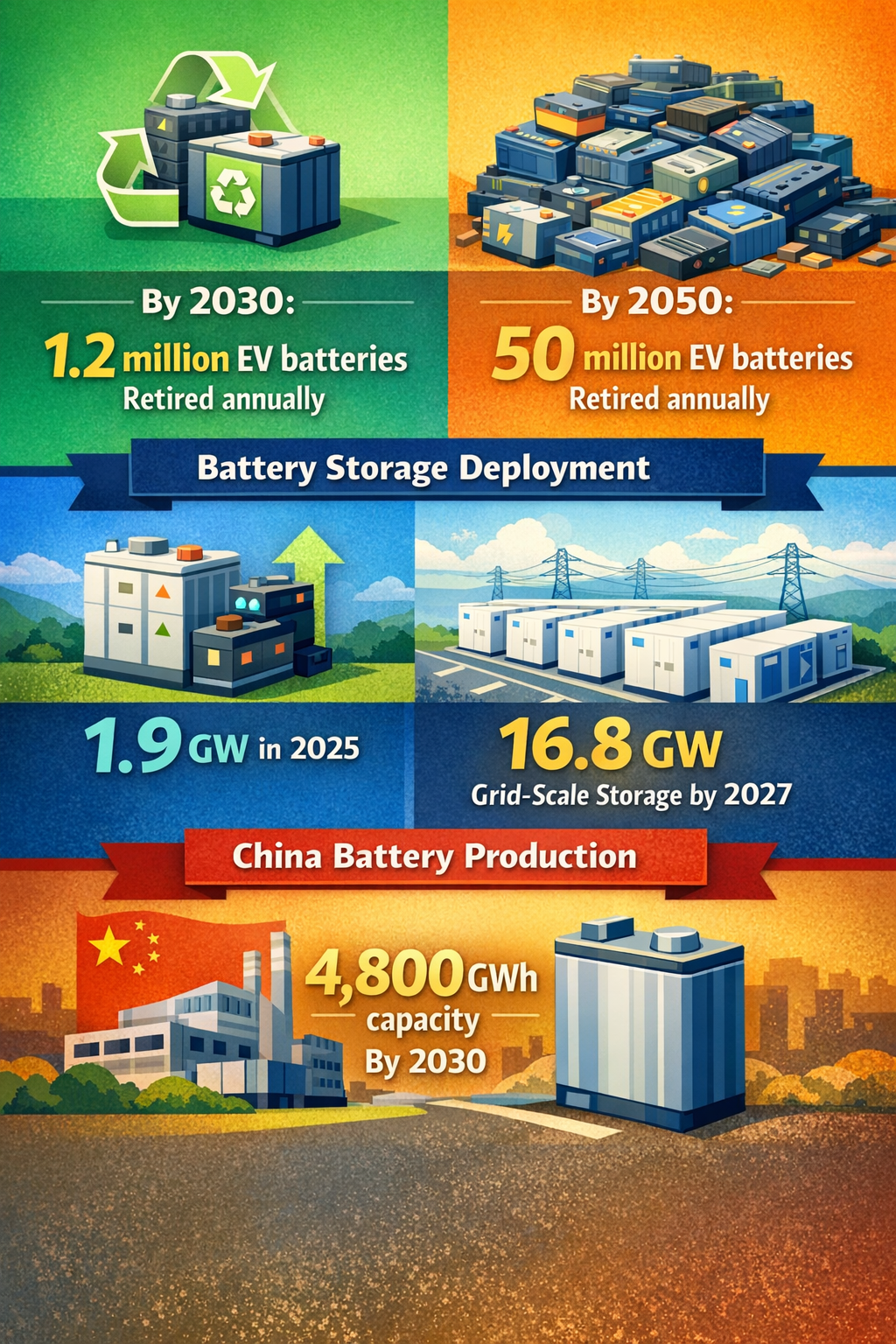
  • Energy Infrastructure & Grid Modernization: Explosion of renewables and battery storage projects (e.g., Australia adding 1.9 GW batteries in 2025), AI-driven grid management, rising electrification in transport and digital sectors, emphasizing distributed energy participation (Australia Power Market).
  • Urban Air Mobility & Safety Regulation Tightening: More rigorous certification, autonomy oversight, battery safety, and airspace integration rules coming by 2026, driving integrated engineering discipline and operational rigor (Urban Air Mobility Safety Standards).
  • AI-Powered Infrastructure & Data Center Growth: Surge in AI compute capacity fueling massive data center and battery storage investments; power availability is the new bottleneck, creating strategic value in integrated energy and computing assets (Top Tech News Today).
  • Regulatory & Policy Momentum: Growing emphasis on battery recycling, circular economy (e.g., U.S. Farm Bill amendments for EV battery repurposing), supply chain due diligence, and ESG embedded in lithium and energy production processes (Rep. Mullin's EV Battery Recycling Provision).

Priority Concerns

Immediate (High-Likelihood, Near-Term Impacts)

  • Market volatility risks from lithium pricing fluctuations and supply disruptions impacting cost projections and contract reliability.
  • Accelerating regulatory demands for safety certification and ESG compliance increasing operational complexity and cost.
  • Rapid technological shifts (e.g., battery chemistry evolution, AI integration) threatening legacy asset relevance and investment timelines.
  • Infrastructure bottlenecks, particularly in grid interconnection and energy storage deployment, limiting scaling potential.

Damaging (High-Impact, Lower-Likelihood)

  • Material disruptions from geopolitical tensions affecting strategic lithium supply chains and cross-border partnerships.
  • Cybersecurity breaches hitting critical AI-powered infrastructure or stakeholder trust erosion from opaque AI and data governance practices.
  • Regulatory misalignment or delays blocking key certification pathways (e.g., Urban Air Mobility or battery manufacturing permitting).
  • Failure to adapt business models to the evolving energy storage demand landscape, leading to stranded assets.

Scenario Implications

ScenarioRoadmap Adaptation
Most Likely: Gradual energy transition with progressive regulatory tightening, rising lithium demand, and diffusion of AI/advanced battery tech. Prioritize investment in modular, scalable battery and energy storage solutions; embed compliance and risk management into design; actively pursue strategic partnerships across clean industry ecosystems.
Best Case: Accelerated decarbonization, breakthrough lithium extraction and battery innovations, robust global coordination, early regulatory harmonization. Leverage leadership through rapid deployment of next-gen clean tech and digitally enabled services; pioneer cross-border collaborations; aggressively expand into new markets and sectors (e.g., Urban Air Mobility insurance products).
Worst Case: Supply chain shocks, fragmented regulations, cybersecurity crises, slow technology adoption, and energy infrastructure failures. Focus on risk mitigation, diversification of supply sources, contingency-driven scenario planning; strengthen cybersecurity, compliance, and operational resilience; defer non-critical expansions.

Stakeholder Perspectives

  • Citizens & Vulnerable Communities: Winners: Enhanced energy access through renewables and storage; Losers: Areas reliant on coal or legacy industries facing disruption.
  • Businesses & Investors: Winners: Early adopters of battery tech, smart grid, and AI-enabled infrastructure; Losers: Non-adaptive firms or those reliant on outdated energy models.
  • Regulators & Policymakers: Winners: Those enabling clear, harmonized certification and ESG frameworks; Losers: Jurisdictions delaying engagement or imposing conflicting requirements.
  • Supply Chain Participants: Winners: Lithium producers with secure CEOL agreements and scalable operations; Battery manufacturers embracing chemistry shifts and repurposing strategies; Infrastructure developers integrating digital tools.
  • Consumers & End-Users: Winners: Early access to reliable, low-cost EVs and energy storage solutions; Losers: Communities affected by delayed infrastructure or cybersecurity incidents.

Transformation Roadmap

TimeframeTechnologyGovernanceInfrastructurePeoplePartnershipsSustainability
Short-term (1–3 years)
  • Integrate battery chemistry diversification (LFP and others) into product offerings.
  • Invest in AI-enabled risk analytics for portfolio monitoring.
  • Establish compliance frameworks for emerging Urban Air Mobility and battery recycling regulations.
  • Implement ESG due diligence protocols aligned with global standards.
  • Support grid interconnection planning aligned with renewable and storage project pipelines.
  • Deploy advanced cybersecurity controls for digital infrastructure.
  • Upskill teams on battery tech, AI applications, and sustainability compliance.
  • Forge cross-functional innovation hubs.
  • Initiate partnerships with lithium producers and clean energy consortia.
  • Engage with regulatory agencies and community stakeholders early.
  • Incorporate circular economy principles on battery lifecycle.
  • Set targets for carbon footprint reduction consistent with national goals.
Mid-term (3–7 years)
  • Scale AI-driven predictive maintenance and automation across energy assets.
  • Adopt advanced battery chemistries with improved performance and recyclability.
  • Lead industry collaboration on certification standards, including system-level safety proofs.
  • Integrate data governance policies for AI and operational data.
  • Deploy modular, resilient charging and storage infrastructure supporting Urban Air Mobility and e-mobility.
  • Expand virtual power plant and demand response capabilities.
  • Develop strategic talent pipelines with emphasis on data science, sustainability, and regulatory expertise.
  • Promote cultural agility to navigate complex multi-stakeholder environments.
  • Establish cross-border alliance frameworks for lithium sourcing and clean energy projects.
  • Collaborate with AI and digital infrastructure leaders for integrated solutions.
  • Accelerate circular supply chains, including battery remanufacturing and repurposing programs.
  • Innovate sustainable financing models aligned with impact investment.
Long-term (7–15 years)
  • Implement AI-powered autonomous operational control across integrated transportation and energy networks.
  • Adopt next-generation energy storage and extraction technologies with minimized environmental impact.
  • Champion global governance alignment across clean energy value chains.
  • Embed continuous certification updates with real-time operational audits.
  • Realize fully interconnected, intelligent urban mobility and energy grid ecosystems.
  • Maintain resilient, renewable-dominant, and decentralized infrastructure.
  • Lead workforce transformation to hybrid digital-physical skill sets and ethical AI stewardship.
  • Institutionalize inclusive stakeholder governance models.
  • Maintain strategic global partnerships securing supply resilience and innovation leadership.
  • Participate actively in multi-sector coalitions shaping market standards.
  • Achieve net-zero impact across operations and supply chains.
  • Integrate community co-designed sustainability frameworks into all projects.

KPIs & Metrics

  • Adoption Rates: Percentage of products and services utilizing diversified battery chemistries and AI-enabled capabilities.
  • Certification Readiness: Number of projects compliant with emerging Urban Air Mobility and battery safety standards.
  • Carbon Intensity: Annual CO2 emissions per unit of energy or product served.
  • Operational Resilience: Frequency and duration of system outages mitigated by AI predictive maintenance.
  • Supply Chain Stability: Lead time variability and supplier diversification indices for critical raw materials.
  • Stakeholder Engagement Levels: Number and quality of formalized partnerships, community agreements, and regulatory consultations.
  • Financial Performance: Return on investment for repurposed battery facilities and clean energy infrastructure.
  • Workforce Development: Percentage of employees receiving cross-disciplinary training aligned with transformation goals.

Enablers & Barriers

  • Enablers: Robust funding frameworks, strategic multi-sector partnerships, clear regulatory guidance, advanced skill development programs, cutting-edge technology adoption, and proactive ESG integration.
  • Barriers: Regulatory fragmentation, supply chain concentration risks, capital allocation inertia, cybersecurity vulnerabilities, talent shortages in emerging disciplines, and potential misalignment between investment cycles and technology evolution.

Benchmarks & Case Insights

  • CleanTech Lithium (Chile): Demonstrated advantage in regulated lithium extraction via DLE technology with CEOL contractual certainty driving valuation uplift (~$959 million after-tax NPV) (CleanTech Lithium).
  • Ford Battery Shift (U.S.): Strategic pivot to domestic LFP cell production supporting cost reductions and supply chain resilience (Ford LFP Production).
  • Australian Power Market: Exemplary integration of renewables with AI-enabled grid modernization and massive battery storage deployment demonstrating demand-driven investment success (Australia Power Market).
  • Urban Air Mobility Certification Framework: Importance of synchronized development of certification, operations, infrastructure, and governance to avoid fragmentation (Urban Air Mobility Safety Standards).

Early Warning Signals

  • Delays or conflicting announcements on urban airspace integration standards from FAA, EASA, and analogous bodies.
  • Sudden large-scale lithium supply reductions linked to geopolitical interference or environmental disputes.
  • Material cybersecurity breaches in AI-powered grid operations or battery manufacturing infrastructure.
  • Divergence between project investment cycles and observed technology adoption rates or chemistry shifts.
  • Significant regulatory pushback or policy reversals on battery recycling and ESG mandates.
  • Failure to secure strategic partnerships or financing for key clean industry projects.

Implementation Guidance

  • Establish a cross-functional steering committee representing technology, governance, risk, sustainability, and commercial units to oversee transformation execution.
  • Form innovation hubs integrating external expertise from leading lithium developers, AI infrastructure firms, and renewable energy consortia.
  • Launch multi-stakeholder coalitions with regulators, suppliers, investors, and community representatives to co-design governance and operational protocols.
  • Pilot “quick wins” such as AI-driven predictive maintenance in lithium battery logistics and targeted battery repurposing initiatives aligned with emerging regulatory frameworks.
  • Iterate roadmap delivery with agile reviews every 12-18 months to incorporate emerging signals and evolving market conditions.

Communications & Engagement Recommendations

  • Adopt transparent, frequent internal communications emphasizing transformation objectives, progress, and interdependencies to maintain alignment.
  • Develop external narratives showcasing leadership in sustainability, innovation, and regulatory foresight to strengthen market trust and investor confidence.
  • Engage community and vulnerable stakeholder groups early, integrating their input in project design to build social license and mitigate risks.
  • Leverage digital platforms and AI-driven analytics to customize stakeholder engagement, enhancing responsiveness and legitimacy.
  • Coordinate cross-sector messaging with partners and industry coalitions to reinforce collective commitment and amplify influence on policy and market standards.
Briefing Created: 19/06/2026

Login