Our Scans
·
Remote Healthcare
·
Intelligence Briefing
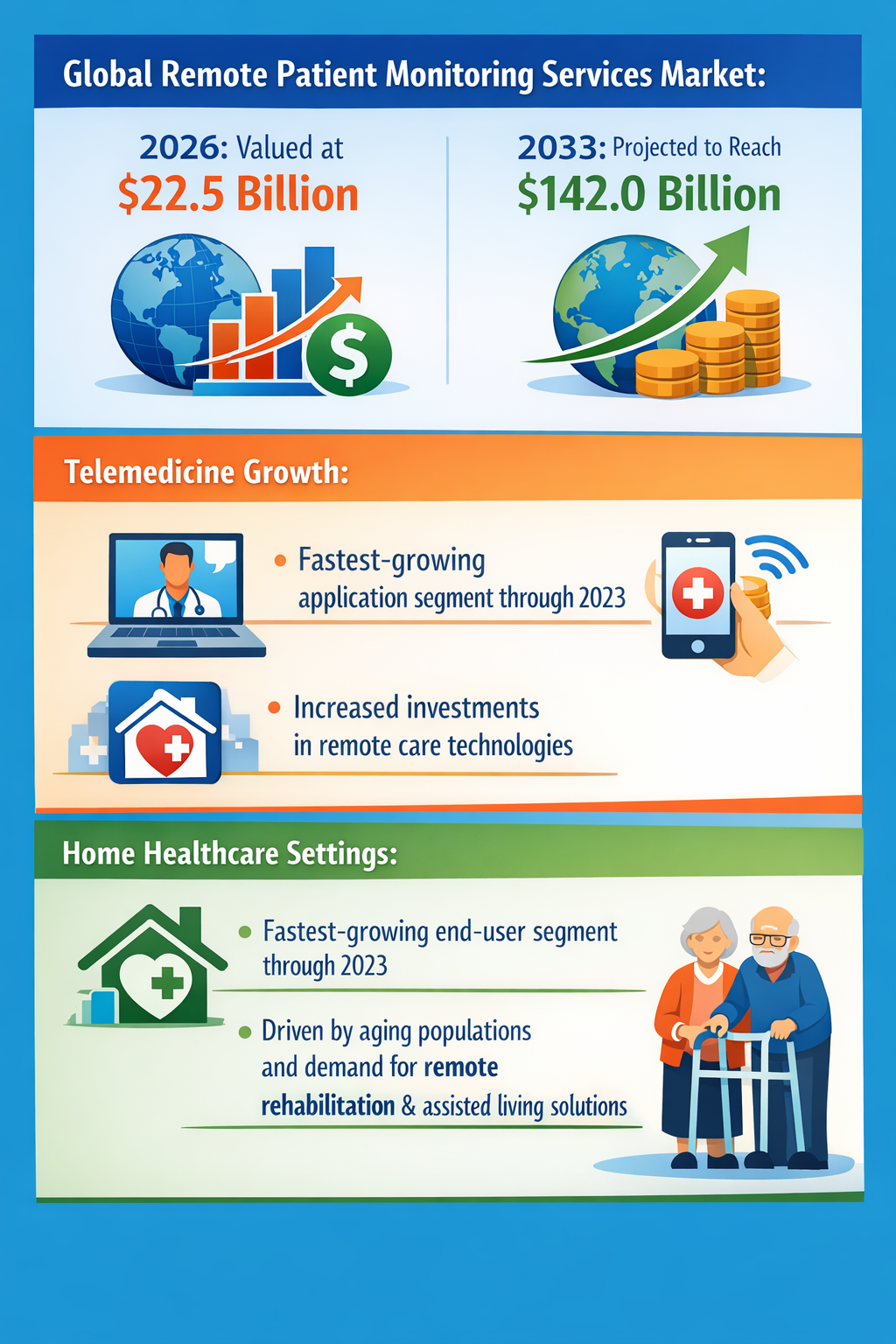
Intelligence Briefing about Remote Healthcare
Critical Trends Impacting Atradius
- Home healthcare is the fastest-growing segment, driven by aging populations requiring remote rehabilitation and assisted living solutions (Persistence Market Research).
- Delivery drones are scaling initially in specific corridors and remote or regulated zones, supporting medical logistics before broader urban deployment (DC Velocity).
- Rising investments in wearable technologies, remote patient monitoring (RPM), and nanotech fibers are accelerating commercialization and adoption globally (OpenPR).
- Improved integration of remote monitoring data with clinical workflows enhances operational value and clinical adoption of RPM programs in North America (Mobility Foresights).
- Innovations such as next-generation devices featuring remote management, MRI compatibility, and extended battery life are anticipated, with product launches expected by 2027 (PR Newswire).
Key Challenges, Opportunities, and Risks
- Challenges: Regulatory hurdles in medical device deployment; integration complexity into existing healthcare and insurance systems; cybersecurity and data privacy risks.
- Opportunities: Expansion in markets serving aging demographics; logistics innovations reducing costs and delivery times; partnerships with health providers for bundled remote healthcare solutions.
- Risks: Technology adoption gaps causing disparities; drone delivery limitations restricting scale; potential for increased liability from remote device malfunctions or data breaches.
Scenario Development
- Best-Case: Rapid regulatory alignment and technological maturation enable broad adoption of remote healthcare devices and drone logistics, driving significant market growth and operational efficiency.
- Optimistic Moderate: Incremental improvements in technology and integration increase RPM adoption mainly in suburban and remote areas; home healthcare expands steadily but urban drone delivery remains limited.
- Challenging: Regulatory delays and cybersecurity incidents slow adoption; supply chain constraints stall product launches; drone logistics confined to pilot zones with minimal scale.
- Worst-Case: Major device failures or data breaches erode trust; regulatory crackdowns restrict deployment; home healthcare growth stalls; drone delivery projects largely abandoned.
Strategic Questions
- How can Atradius position itself to assess and mitigate emerging risks from the expanding remote healthcare technology ecosystem?
- What partnerships or data integrations could enhance Atradius’ ability to evaluate and insure novel healthcare delivery models?
- In what ways might regulatory and cybersecurity developments impact Atradius’ underwriting frameworks and risk appetite?
- How can Atradius leverage insights from evolving medical logistics, such as drone deployments, to expand its coverage and solution offerings?
Actionable Insights for Strategic Decision-Making
- Atradius could consider developing expertise in assessing technical and regulatory risks specific to remote healthcare devices and services.
- Exploring collaborations with medical technology firms or clinical networks could enrich risk intelligence and product innovation.
- Proactively monitoring regulatory trends and cybersecurity incidents could enable agile adjustments to underwriting policies and risk management.
- Evaluating insurance models for emerging logistics solutions like drone delivery could unlock new market opportunities.
Briefing Created: 03/06/2026