Our Scans
·
Dementia
·
Intelligence Briefing
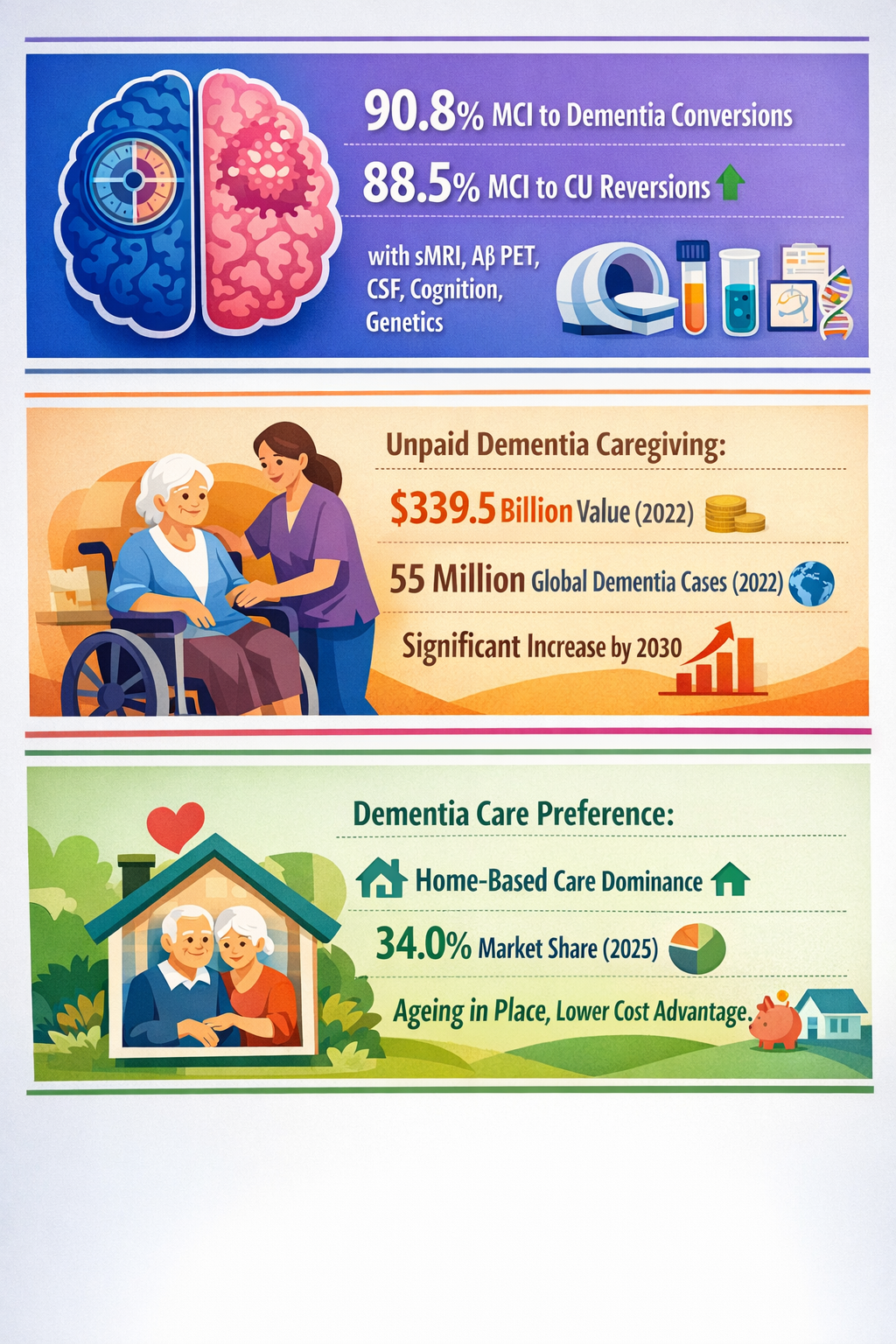
Intelligence Briefing about Dementia
Critical Trends Impacting Atradius
- The mixed dementia segment is projected to grow rapidly, with a compound annual growth rate (CAGR) of 8.3% between 2026 and 2035, indicating increasing prevalence and complexity in dementia cases (Precedence Research).
- Advancements in multi-modal diagnostic tools combining sMRI, Aβ PET, CSF, cognition, and genetics data have significantly improved accuracy in identifying current and future Alzheimer’s disease cases, with predictive success rates exceeding 88% for Mild Cognitive Impairment (MCI) conversions and reversions (Alzheimer’s & Dementia Journal).
Key Challenges, Opportunities, and Risks
- Challenges: Rising dementia incidence, especially mixed dementia, may increase claims related to health, disability, and long-term care. Complexity in diagnosis demands adapting underwriting and risk assessment models.
- Opportunities: Leveraging advanced diagnostic data could enable Atradius to develop innovative insurance products tailored for early intervention and risk mitigation.
- Risks: Mispricing due to rapidly evolving clinical profiles and unpredictability in disease progression could expose the organization to underwriting losses if trends are not well understood.
Scenario Development
- Best-Case: Early and accurate dementia diagnoses become widespread leading to effective intervention, stabilizing long-term care costs and enabling targeted insurance products.
- Moderate Growth: Mixed dementia incidence increases steadily, with diagnostic advancements improving risk stratification but care costs remain high, pressuring claim reserves.
- Challenging Landscape: Diagnostic breakthroughs are unevenly adopted, leading to inconsistent underwriting quality, increased claims variability, and regulatory scrutiny.
- Worst-Case: Rapid rise in mixed dementia cases outpaces healthcare system capacity; inaccurate risk modeling results in significant financial exposure and reputational damage.
Strategic Questions
- How can Atradius integrate emerging diagnostic technologies into underwriting processes to improve risk accuracy?
- What product innovations could address the growing and more complex mixed dementia market effectively?
- How might shifts in dementia prevalence influence long-term claims forecasts and reserve strategies?
- What partnerships with healthcare providers or tech firms could strengthen Atradius’ position in this evolving landscape?
Actionable Insights for Strategic Decision-Making
- Atradius could explore partnerships to access advanced diagnostic data for more precise risk profiling.
- Developing flexible insurance solutions tailored for dementia-related risks could capture emerging market demand.
- Continuous monitoring of epidemiological trends and medical advancements could help preempt shifts in claims patterns.
- Investing in predictive analytics that incorporate multi-modal diagnostic indicators could enhance underwriting resilience.
Briefing Created: 16/06/2026