Global Scans
·
Globalization
·
Key Findings (PINS)
April 2025 continues to reveal complex and evolving dynamics shaped by globalization across multiple sectors. Noteworthy trends indicate a shift towards localized supply chains alongside persistent global interdependencies, with significant implications for agricultural sustainability, human resource practices, and food safety. These developments underscore the necessity for adaptive strategies within regulatory and inspection frameworks, anticipating changes through 2035.
Applications
- Research highlights the critical role of circular economy principles to enhance the resilience of Ukraine's agricultural sector amid ongoing globalization pressures and military conflicts. Implementing these strategies is deemed essential for sustainable development and food security in the region (Frontiers in Sustainable Food Systems, 2026).
Plans Examinations
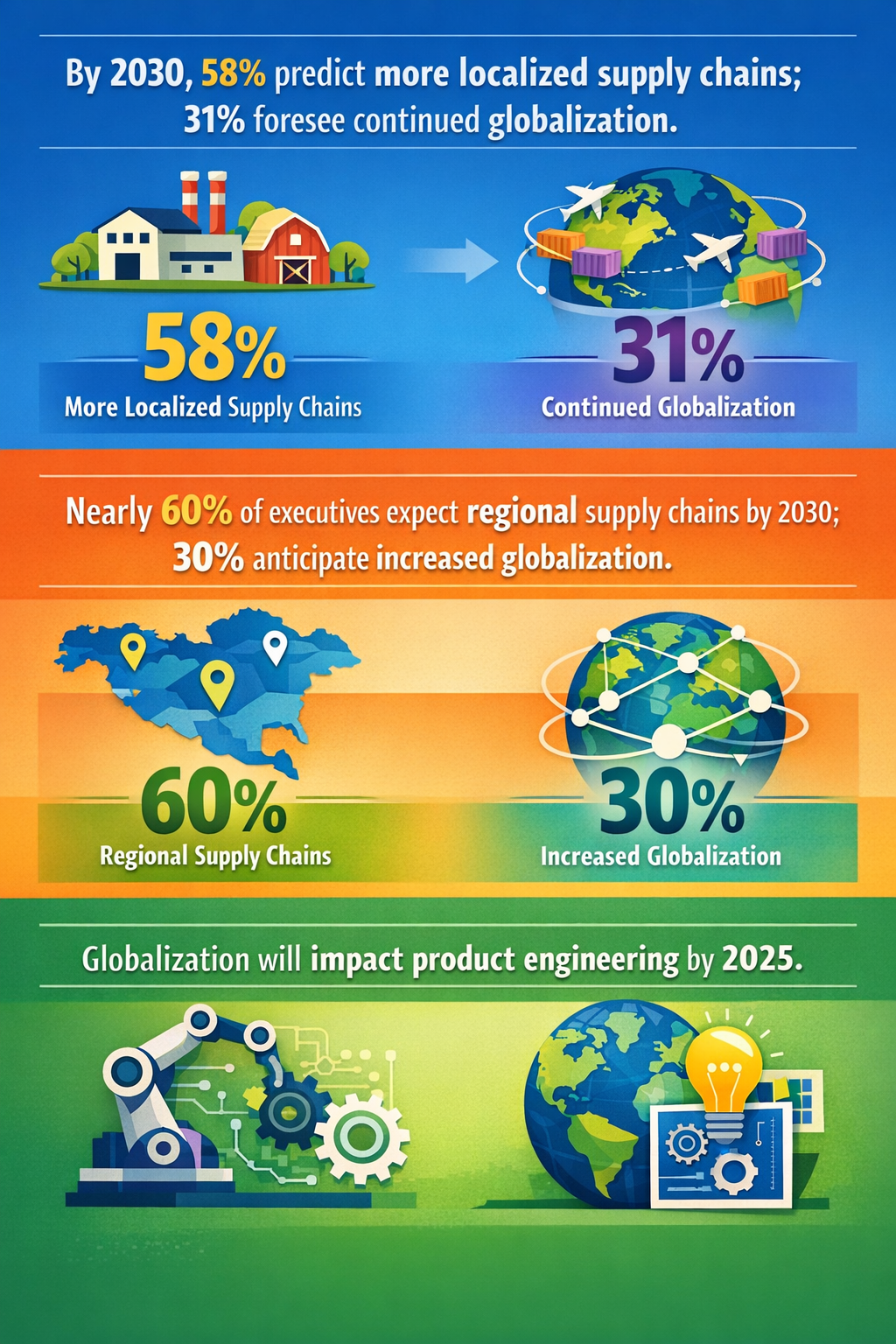
- Forecasts suggest a significant transformation in global supply chains by 2030, with 58% of industry leaders expecting a trend towards more localized chains, reducing traditional globalization's footprint. Only 31% anticipate a continuation or intensification of globalized supply structures, driven partly by advancements in AI and other technologies (Forbes, October 2025).
Appeals
- Globalization's complexity has increased the risks associated with food safety, where contaminants in local contexts can rapidly escalate into global crises. This underscores the importance of rapid response strategies and resilience frameworks within inspection and regulatory agencies to mitigate transboundary food safety threats (Observer Research Foundation, 2025).
Human Resources and Workforce Trends
- The human resource landscape in West Africa is projected to be profoundly shaped by globalization, alongside technological innovation and demographic changes. This evolution calls for forward-looking HR strategies to attract, develop, and retain talent in increasingly interconnected economic environments (Business & Financial Times, April 2025).
Briefing Created: 09/08/2026