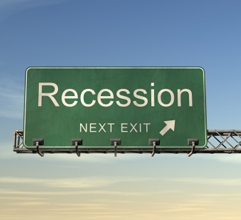
[New] Fears of a recession loom large as the battle for control over the Strait of Hormuz enters a dramatic new phase and dashes any hope of a swift end to the conflict in the Middle East.
9News
[New] Goldman Sachs Asset Management argues recent corporate credit spread widening is more noise than signal, suggesting markets may be overpricing recession risk.
The Idea Farm
[New] Even a slightly rosier outlook could mean that rather than face a recession, the global economy will face a period of weaker than previously expected growth in the third quarter, before global GDP growth recovers to its pre-conflict pace of just over 3% in late 2026 and into 2027.
The Guardian
[New] There is a global commodity price shock with no clear resolution timeline that increases recession risk.
BTRM
[New] At one point in the fall, a Bloomberg model projected a 100% risk of a US recession over the next 12 months.
CNN
The UK will fall into recession towards the end of the year as energy costs soar.
The Council of Industry
Global growth is likely to slow modestly to 3.2% for the full year, hurt by the energy shock but avoiding recession, and then recover to 3.4% in 2027 as oil and gas prices ease.
Morgan Stanley
Broader concerns about global recession risk or demand erosion from electric vehicle adoption have added complexity to the 2026 demand picture.
Mudrex Learn
Downward Price Pressure (Bearish Factors)Global Manufacturing Slowdown: Some analysts predict a potential deterioration in global manufacturing conditions or a general economic slowdown/recession could curb overall industrial demand for aluminum.
sooktrading.com
Consumer, business and investor confidence could collapse, which could lead to markedly stronger inflation and subdued economic growth, if not a global recession.
Desjardins.com
Coupled with the chance of a prolonged conflict with Iran, and it could spell recession.
CUSO Magazine
Britain is facing a £35bn economic hit and the risk of a recession in 2026 as the fallout from the Iran war adds to the pressure on Keir Starmer's government, a leading thinktank has warned.
The Guardian
If the composite PMI stays below 50, recession-risk concerns will rise.
Otet Markets Blog
Last updated: 24 June 2026
Hi,
Would you like a quick online demo of our service from an experienced member of our team?