Trend Alerts
What to Watch for in ‘24: The Evolution of Megatrends
A lot of people offer their opinions about what the upcoming year has to offer. At Shaping Tomorrow, we decided to look further ahead at the major trends shaping the future and the signals that may appear next year that would indicate these trends...
How AI is Driving Innovation in Healthcare
The intersection of healthcare and technology, particularly in the domain of Artificial Intelligence (AI), presents an evolving landscape of new possibilities and challenges.

Five Ways AI is Powering Energy-Sector Innovation
In an era where energy demands are as dynamic as the weather patterns that increasingly influence them, artificial intelligence (AI) has emerged as a linchpin for innovative solutions.

Charting Our Course Forward: a High-Level Outlook for the Coming Decade
In our final edition of this series about China, the US, and Europe, we bring together the insights gathered from our exploration across the 3 major global players and highlight a 4th global force that will have a significant influence during the ...
Europe's Pioneering Role in Shaping Tomorrow
This week' discoveries in our mini-series covering China, the US and Europe, will reveal a future Europe as a region with a continued profound impact during the coming decade in terms of the governance of technologies, sustainability, and multilat...

The Influence of the United States on Shaping Tomorrow
In our future viewing mini-series covering China, the US and Europe, we now turn our focus to the United States, and its contributions to the next 10 years in terms of leading technological innovation, global economic leadership, and addressing gl...

China's transformative impact on our future
In this the 2nd newsletter of 5, we focus on China's expected exceptional contributions that will reshape the global landscape.

How will China, the USA and Europe impact our global future?
Today, we’re starting a mini-series of 5 newsletters - unveiling 3 scenarios that will guide our exploration of how China, the US, and Europe may distinctly contribute to shaping our future.
How machine learning can help with wiser future decision-making
As a close follower of your future possibilities and risks you may have come across the statement 'With the launch of ChatGPT and GPT-4, AI has reached the iPhone moment' or something similar.

War in Ukraine one year on
How may the ongoing conflict In Ukraine affect you?

Future jobs - Protect yourself
Will we be affected by employment growth, robots, health, environment, quantum computing, food, and space in the not too distant future?
Four Global ChatGPT Scenarios
This video looking at the the potential futures of this newly emerging topic was created by Mike Jackson using Shaping Tomorrow with ChatGPT and Pictory.ai

Future society?
Society is changing rapidly, every day. We don’t see it but, if you take a dip into the worlds of 1982, 1992, 2002, 2012 and 2022, you can see the massive changes in how we live, work, relate, talk and transact.

The metaverse will be worth trillions
The market for the Metaverse could be between $8 trillion and $13 trillion by 2030, with total Metaverse users of around 5 billion. But getting to that market level is going to require infrastructure investment. Virtual worlds can be fun but, when...
11 realities of 2030
If we could jump time and skip into 2030, what would it look like? To be honest, it would look a lot like 2022, except a few big changes to society and technology.

Ukraine/Russia crisis: sunflower-led global paradigm change
UPDATED 25/03/22: The war in Ukraine has created a massive humanitarian crisis impacting millions of people, and shifting monetary policies around the world poses another major threat to the global economy.

We need to talk about Crypto
Crypto is in its usual rollercoaster mode with bitcoin prices halving in January, but then it did the same in January 2021.
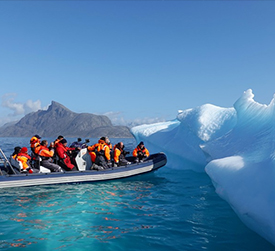
Climate Advances
Many business people still feel like they don't know where to start when thinking about sustainability and climate change so Dennis Draeger, our research director, looks at climate change and the future after COP26.

Every Breath You Take
The coronavirus has sparked renewed interest in improving the quality of the air we breathe, specifically the air inside buildings. Although many are looking for short-term solutions that safely allow children to return to school and workers to ge...
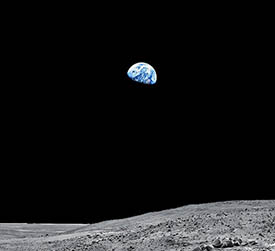
Ready to See the Earth?
In September, SpaceX launched the first all civilian crew into space, and recently, William Shatner became the oldest person to visit space. With commercial space flights gaining momentum, what does the future of space tourism look like?

Will fusion be the solution to the climate crisis?
Fusion energy has long been a blue sky ideal of renewable, sustainable energy. It promises large amounts of energy made from readily available fuel and with far fewer safety concerns than current nuclear power plants. While the road to commerciali...
Breaking the life barrier
Interest in longevity and life extension is growing rapidly. Perhaps, the pandemic is providing even more people with the time and motivation to research how to live longer. However, the interest has risen as research has deepened our understandin...

How long is Covid?
Our previous look at the future of COVID-19 was more than a year ago. Since then, the virus has mutated and the long term symptoms of the virus have been repeatedly reported. At the same time, the effects of COVID-19 have continued to disrupt the ...
Quantum Leaps
Quantum technologies have been building hype for well over 10 years. Finally, significant advances in the research are happening proving that these technologies are more than theoretical. How and when should society prepare for the impending chang...

Table-Turning Businesses
The pandemic turned the tables for many businesses. Major disruptors have slowed down while corporate giants have accelerated. Can small and medium sized enterprises (SME) keep up?

Collaborating with Machines
As organizations continue to adopt digital immersion and AI, the world will become increasingly difficult to navigate. How will we differentiate between what is real and what is simply a product of our digital interactions?

Future Foods
The food & beverage industry has been disrupted by changing eating habits during the pandemic. Will the trends be reversed or will the changes endure?

Tomorrow's Skills
Which skills will be most important for living in the future and how should we mitigate for the growing skills gap?
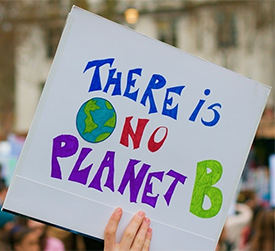
Climate Prospection
How do we address climate change now?

Transportation Outlook
How will we transport ourselves and goods in the future and at what risk?